
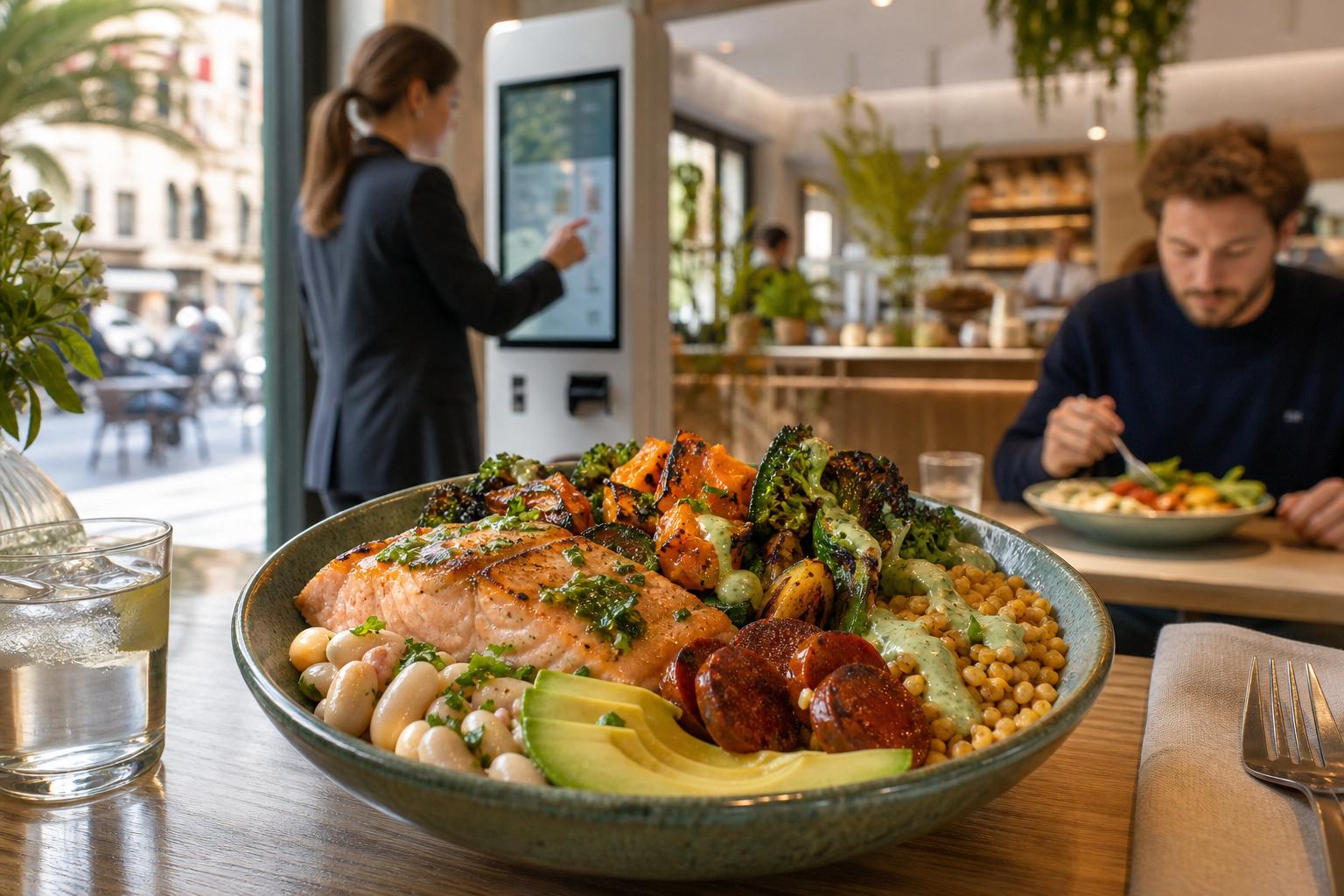
A new restaurant in Barcelona is capturing the attention of busy diners who care about their meal choices.
Fresora stands out with a straightforward concept: it serves quick meals made from fresh ingredients, allowing customers the freedom to choose what goes on their plates. With two locations in the city, it aims to attract those who can’t spare an hour for lunch but refuse to settle for the standard fast-food options.
Fast service without a standard tray
The ordering process is similar to fast-food chains in one key aspect: customers place their orders at a kiosk, and then the food is brought to their table. The design of the experience focuses on speed, minimizing wait times and simplifying meal selection.
However, that’s where the similarities end. At Fresora, diners are not limited to a fixed menu. Instead, they can build their own plates by choosing a source of protein, a side dish, vegetables, and a sauce if desired. This flexibility allows for a hearty meal post-workout or a lighter option during a busy day.
Customers don’t select a predefined menu; they create their meal according to their hunger, preferences, and available time.
This approach caters to a noticeable trend in urban dining. Many consumers are now looking for convenience without compromising on product quality or having to eat the same thing. Pricing is also a consideration, with meals starting around 10 euros, making this option accessible for daily dining.
Plates that emphasize fresh products
Social media highlights the variety of options available. One plate may feature Catalan sausage with white beans and seasonal vegetables, while another focuses on salmon, avocado, and various toppings. For those seeking something simpler, there are also ham toasts available.
This variety is crucial in a market where lengthy menus can complicate decisions. Fresora simplifies the process, focusing on a few identifiable categories of food. This makes it easier to customize a meal based on dietary habits, budget, or personal hunger levels.
Building your plate in a few steps
- Select a protein, such as fish, meat, or a plant-based alternative available.
- Add a side according to your preference: vegetables, beans, grains, or other available garnishes.
- Include fresh products, some of which change with the seasons.
- Choose a sauce sparingly, depending on your desired flavor.
- Confirm your order at the kiosk before being served at your table.
This model also greatly benefits groups. Two colleagues can enjoy lunch together while creating entirely different dishes. One may opt for a vegetarian plate, while the other chooses a protein-rich option. This flexibility avoids the need to find separate restaurants to satisfy different tastes.
An attractive price around 10 euros
Pricing is another appealing aspect of this establishment. Some combination plates start around 10 euros, which positions them competitively with traditional fast lunch offerings. In bustling neighborhoods, the price difference is often just a few euros, particularly for workers and students who frequently eat out.
Fresora also offers a 7-euro discount on the first order with a promotional code shared in a video about the restaurant. This initiative encourages curious diners to try the concept, although the final price will rely on the chosen ingredients.
Customizable dishes starting at around ten euros: the restaurant seeks to demonstrate that a quick meal can still be varied and affordable.
However, exercise caution with customization. A balanced plate does not rely solely on your chosen protein or vegetables. The amounts of side dishes, sauce, and extras can quickly alter the meal’s nutritional value and overall cost. A base of vegetables, a moderate portion of carbs, and a sauce served thoughtfully often provides a more balanced result.
A response to new lunch habits
The success of this kind of establishment reflects changes in urban living. With hybrid work schedules, short commutes, and fragmented days, many customers want to eat within thirty minutes without resorting to a hasty sandwich. The table service ensures a level of comfort, while the kiosk minimizes counter wait times.
What really defines a balanced meal
A balanced meal doesn’t have to be devoid of flavor. It involves combining various elements: a protein source for satiety, vegetables for fiber, a carbohydrate or legume for energy, and a suitable amount of fat. For instance, avocado can provide healthy fats but becomes calorie-dense in large portions.
The white beans featured in some plates are an excellent choice, offering complex carbs, fiber, and plant-based protein. Paired with vegetables and meat or fish, they create a filling meal without heavily relying on highly processed items.
With two locations in Barcelona, Fresora embraces a growing trend of local, customizable dining that suits busy schedules. The challenge ahead will be maintaining fresh ingredients, efficient preparation, and clear pricing as customer traffic increases.