
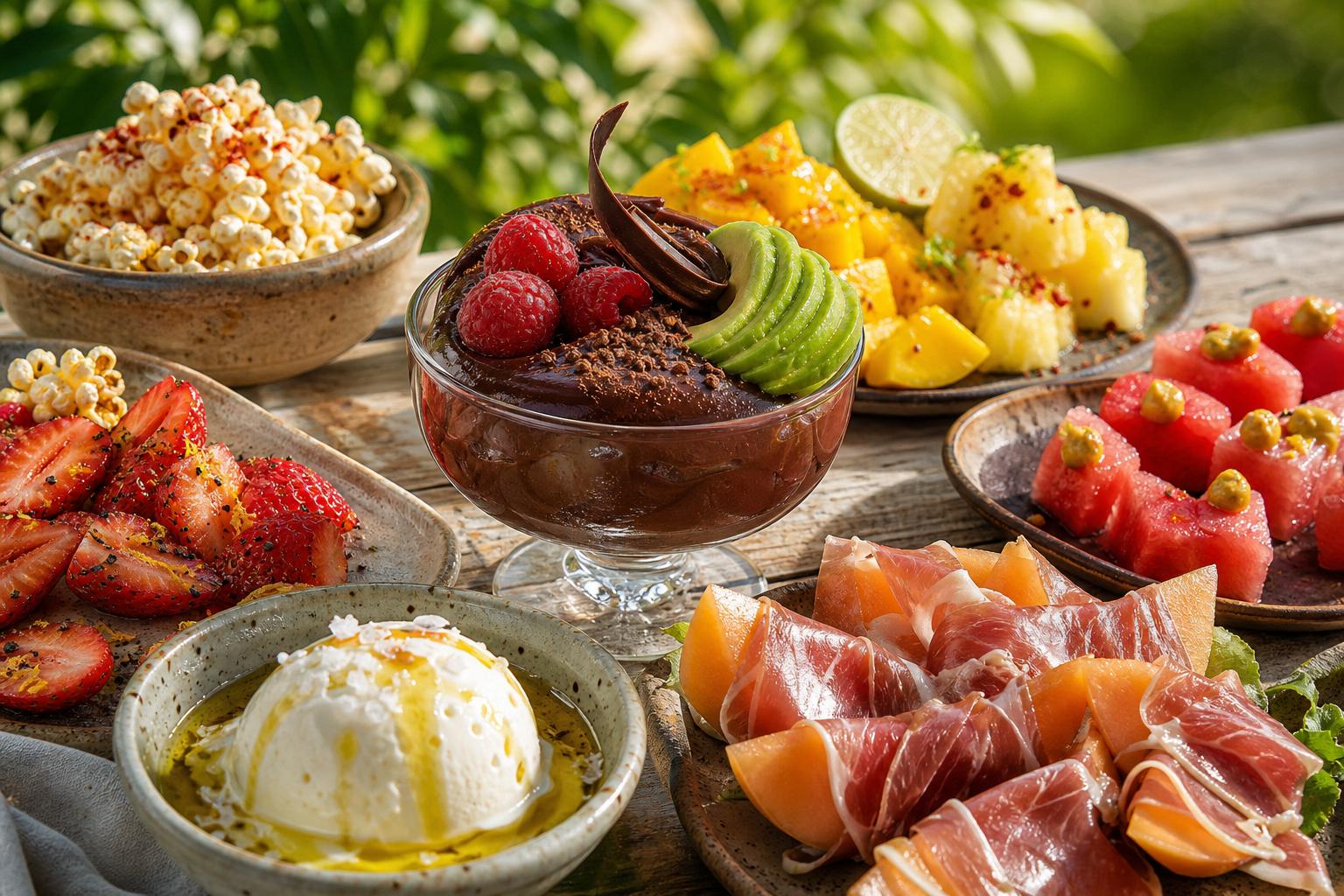
From bold spice blends to unexpected ice cream flavors, unconventional pairings are making waves in kitchens and summer tables.
Think of a slice of watermelon topped with mustard, chocolate combined with avocado, or fries dipped in a frozen drink -these suggestions may seem odd at first, but they operate on a simple principle. The interplay between sweet, salty, sour, bitter, and spicy notes uncovers flavors we might normally overlook.
Avocado moves from toast to dessert
Avocado and chocolate share smooth, creamy textures that can transform your dessert repertoire. When blended with cocoa, avocado adds a rich creaminess to mousses while avoiding a dominant vegetable flavor. It can effectively replace some cream or butter in homemade recipes.
The cocoa’s sweetness effectively conceals the avocado while the latter contributes a beautifully dense and silky texture.
This treat is particularly appealing for those seeking dairy-free options. However, keep in mind that while avocados contain healthy fats, they are calorie-dense. To maintain balance, be mindful of the added sugar and choose a minimally sweet cocoa powder.
Black pepper enhances summer fruits
Sprinkling freshly ground black pepper over strawberries, peaches, or pineapple may raise eyebrows, but it’s a game-changer. Its woody, slightly spicy notes amplify the perception of sweetness and linger on with ripe fruit flavors.
Getting the quantity just right is crucial. Use just a pinch of freshly ground pepper for a fruit salad serving four. A splash of lemon juice with strawberries or some basil leaves alongside peaches can intensify the summer vibe.
Olive oil and salt on ice cream
A scoop of vanilla ice cream can be elevated by a drizzle of extra virgin olive oil and a pinch of salt. The oil brings a fruity or even herbaceous aroma, while the salt curbs the sugary taste and highlights the vanilla flavor.
Your choice of olive oil is key; a pungent oil can overpower the dessert. Opt for something milder, tasted first on bread. Serve the ice cream very cold and add the oil just before serving to preserve the temperature contrasts.
- Select a simple vanilla or yogurt ice cream.
- Pour a teaspoon of oil per portion.
- Add just a few flakes of sea salt.
- Taste before adding more, as salt can easily take over.
Prosciutto and melon, a classic combo
Serving fresh melon with prosciutto remains one of the simplest yet most satisfying ways to enjoy summer produce. The melon brings hydration and sweetness, while the cured meat offers saltiness and depth. This dish shines with well-chilled, fragrant melon.
To avoid excess saltiness, aim for a thin slice of prosciutto per melon wedge. A sprinkle of black pepper, a few mint leaves, or a dash of balsamic vinegar can enhance the dish without overwhelming it.
Controversial snack combinations
Spicy popcorn is a classic movie snack. The fat from the corn tempers the heat of the chili sauce, while the acidity of the sauce prevents it from feeling too heavy. Keep it balanced; too much sauce can quickly make for soggy popcorn.
Another hotly debated choice on social media is dipping hot, salty fries into a sweet frozen treat. The contrast lies not only in flavors but also in temperature. The warmth and cold alternate, while the salt amplifies the sweetness, and the creaminess softens the fried potato.
These unconventional pairings may divide opinions, yet they adhere to a culinary principle: contrast often creates balance.
Apple, melted cheese, and toast
Inserting thin apple slices into a cheese toastie adds crunch and a hint of acidity. A tart green apple pairs beautifully with aged cheese, cutting through the richness. Slice the apple thinly so it can warm up without turning mushy.
This idea works just as well with pears and blue cheese. Skip the added sugar -the fruit already serves that purpose.
Banana, peanut butter, and bacon
The trifecta of banana, peanut butter, and bacon plays with opposing textures. Bananas are soft and sweet, peanut butter has a thick consistency, and bacon contributes crispness, salt, and smokiness.
While often a breakfast favorite, this combination can be rich. A lighter variation involves using just one slice of whole-grain bread, half a banana, and a thin layer of no-added-sugar peanut butter. Grill the bacon separately to reduce excess grease.
Lime juice, salt, and chili on fresh fruit
On mango, pineapple, or watermelon, combining lime juice, salt, and chili offers a delightful medley of tastes: sweet from the fruit, acidity from the lime, saltiness, and a kick from the chili. This dish is best served chilled, either in a bowl or on skewers.
Salt brings out the natural juices of the fruit, so add it just before serving to avoid a watery salad. For those averse to spiciness, feel free to substitute chili with sweet paprika or a dash of ground ginger.
Watermelon and mustard, a divisive test
Watermelon paired with a hint of strong mustard is arguably the most polarizing option in this collection. The mustard adds bite and acidity that contrast with the sweet, hydrating fruit. A very small amount is key; the goal is to surprise rather than overpower.
Start with a small dab of mustard, akin to a pea size. A mild mustard works best for newcomers. If the combination feels too intense, add a few drops of lime juice to help bridge the flavors.
These experiments are ultimately about taste, yet they also encourage creative cooking with what’s on hand in your refrigerator. Very ripe fruit, leftover cheese, or infused oils can serve as the foundation for a delightful, unexpected dish.