When the weather is warm, spending hours in the kitchen is rarely appealing. Yet, with a few thoughtful steps and quality seasonal ingredients, a summer lunch can be delightfully surprising. Here are five easy recipes, inspired by a chef, to create fresh, generous dishes perfect for sharing.
Simple summer cooking, never banal
The idea is straightforward. Use seasonal ingredients, handle them with care, and let the seasoning work its magic. A beautifully presented dish doesn’t require complex techniques; it often comes down to a harmonious balance of crunchiness, creaminess, acidity, and a touch of fat.
These recipes focus on contrast, pairing tender vegetables with juicy fruits, raw fish enhanced with a creamy element, and lobster with refreshing melon. This blend creates a stunning effect that seems effortless.
The chef’s true secret: seasoning is as important as the ingredient
In these summer ideas, seasoning is not just an afterthought; it becomes an integral part of the dish. Flavorful mustard, a drizzle of spicy oil, white pepper, or coriander seeds can entirely elevate a dish.
This cooking style avoids heavy sauces, maintaining the freshness of the ingredients and allowing their natural flavors to shine through. It results in lighter, cleaner, and often more elegant presentations.
1. Green bean salad with peaches, cherries, and mozzarella
This colorful, budget-friendly starter is incredibly easy to prepare. It serves four and is delightful warm, enhancing its character.
Ingredients:
- 600 g green beans
- 2 yellow peaches
- 50 g cherries
- 1 cucumber
- 200 g mozzarella
- 2 teaspoons flavored mustard
- Olive oil
- Fleur de sel
- Some young verbena leaves
Preparation:
- Trim the green beans and cook them in salted boiling water.
- Drain them without cooling and immediately season with a bit of olive oil.
- Cut the peaches into wedges.
- Pit the cherries and slice them in half.
- Peel the cucumber and slice it thinly.
- On each plate, place a bit of mustard and loosen it with a drizzle of olive oil.
- Add the green beans, cucumber, fruits, and tear the mozzarella into pieces.
- Finish with the fleur de sel and verbena leaves.
The key detail is to drizzle the oil while the green beans are still warm, allowing them to absorb more flavor, making the salad delicious.
2. Steamed eggplant presse, sardines and sheep cheese
This dish has a rustic charm yet boasts a refined finish. It requires a bit of patience for pressing, but the result is dense, creamy, and flavorful.
Ingredients:
- 3 or 4 eggplants
- 1 can of sardines in oil
- 50 g sheep cheese
- A small pinch of cumin
- 1 green onion
- 1 teaspoon mustard
- Olive oil
Preparation:
- Peel the eggplants, cut them in half, and lightly salt them.
- Steam them for at least 30 minutes until very tender.
- Once soft, place them in a terrine under pressure for one hour.
- Retain the cooking water.
- Grate the sheep cheese over the eggplants and lightly brown them.
- Brush the skin of one eggplant with oil and grill it in the oven.
- Blend the grilled skin with mustard, cumin, cooking water, and a bit of sardine oil.
- Add the sardines and seasoning when serving.
- Finish with finely sliced green onion.
This dish is interesting as it transforms a simple vegetable into something almost festive. The grilled skin adds a delightful smoky note.
3. Sea bass sashimi with buttermilk and cherries
This starter is more refined but remains approachable, provided the fish is exceptionally fresh. The buttermilk offers a sweet and tangy sensation that surprises with the first bite.
Ingredients:
- 300 g sea bass fillet
- 4 tablespoons buttermilk
- 100 g cherries
- White pepper
- Spicy oil
- Olive oil
- Fleur de sel
Preparation:
- Remove the skin, dark parts, and bones from the sea bass fillet.
- Slice the fish into thin pieces about 1 cm thick.
- Arrange them on plates.
- Drizzle a little buttermilk over them.
- Add pitted cherries, then season with white pepper, fleur de sel, olive oil, and a splash of spicy oil.
For a twist, you can substitute the usual seasoning with a little white soy sauce. In this case, be very careful with the salt, as the sauce is already salty.
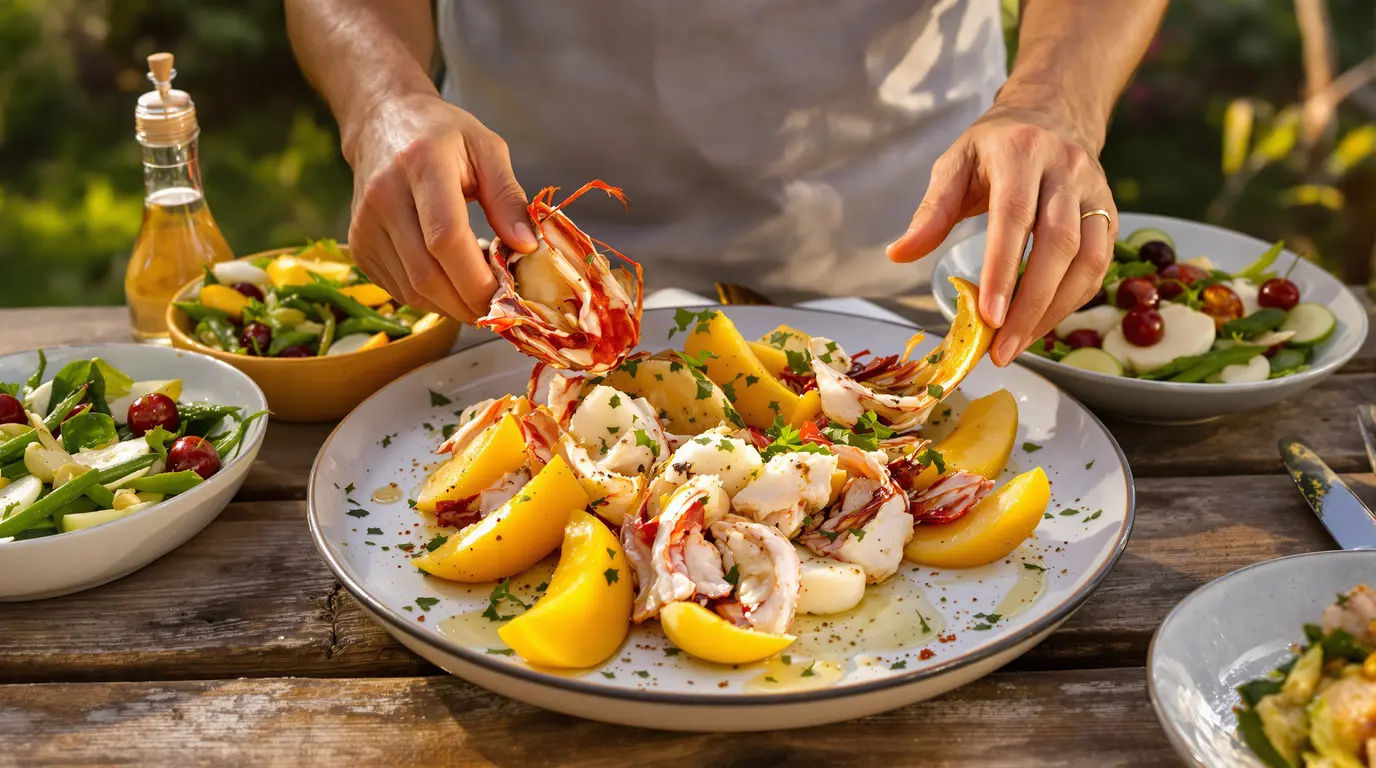
4. Melon, lobster, and coriander seeds
This is the most spectacular recipe of all. While it requires a bit more investment, its simplicity is key. The melon provides juiciness and sweetness, while the lobster adds delicate, almost sweet meat.
Ingredients:
- 1 300 g lobster
- 1 melon
- Coriander seeds
- White pepper
- Spicy oil
- Fleur de sel
- A drizzle of olive oil
Preparation:
- Peel the melon, remove the seeds, and cut it into wedges.
- Split the lobster head lengthwise.
- Extract the meat.
- Boil the tail for a maximum of 2 minutes.
- Cook the claws for 3 minutes.
- Shell the claws while they are still warm.
- Arrange the melon and lobster on a platter.
- Add fleur de sel, white pepper, crushed coriander seeds, and a drizzle of olive or spicy oil.
Be sure to keep the head and shells, as they can be used for a broth or flavored oil later.
5. Lobster minestrone, a complete summer broth
This final dish resembles a light soup but is far more generous than it appears. It combines fresh vegetables, pasta, and lobster in a highly flavorful broth.
Ingredients:
- 1 300 g lobster
- 1 bunch of young carrots
- 1 bunch of young turnips
- 1 fennel bulb
- 100 g peas
- 3 green onions
- 120 g alphabet pasta
- 1 garlic clove
- Garlic chives
- Basil
- Anise-flavored alcohol
- Olive oil
Preparation:
- Split the lobster head.
- Cook the tail for 2 minutes and the claws for 3 minutes.
- Extract the meat.
- Remove the gills and sauté the head in a pot with a drizzle of olive oil.
- Add one onion, a small carrot, diced fennel, and crushed garlic.
- Sauté gently.
- Pour in a small glass of anise-flavored alcohol, cover with water, and let simmer for 30 minutes.
- Add some basil leaves and strain the broth.
- Cut the remaining vegetables into small cubes and cook them separately.
- Cook the alphabet pasta in the broth.
- Add the vegetables and lobster meat in pieces.
- Finish with chopped garlic chives and fresh basil.
The secret here is to keep the vegetables slightly firm, as they will remain attractive in the broth and offer a genuine sense of freshness.
How to adapt these recipes for your summer table
These ideas can easily be modified according to the day’s market offerings. In the salad, feel free to swap peaches and cherries for apricots or strawberries. You can also exchange mozzarella for some fresh cheese or yogurt.
In the pressed eggplant dish, adding sorrel introduces a refreshing herbaceous note, if available. If you crave bolder flavors, a touch of horseradish can replace the mustard. Nothing is set in stone. This flexibility is what makes this style of cooking so enjoyable.
Small details to remember
In summer cooking, the details make a difference. Don’t cool the green beans immediately; allow them to absorb the oil and aromatics. Avoid overcooking the lobster, as this will make the meat tougher.
For the sea bass, choose an impeccably prepared fillet. And if using white soy sauce, be cautious with the salt as the sauce adds its own salinity. These small choices can elevate a simple recipe into a beautifully presented dish.
To conclude
These five recipes demonstrate that a summer meal can be easy, elegant, and full of flavor. There’s no need to overdo it. Choosing quality ingredients, using good seasoning, and cooking them just right are often sufficient to create a delightful experience.
Start with the salad or the pressed eggplant if you want to keep to a modest budget. Save the lobster for a more festive occasion. No matter what, your plates will be visually enticing from the first glance.