
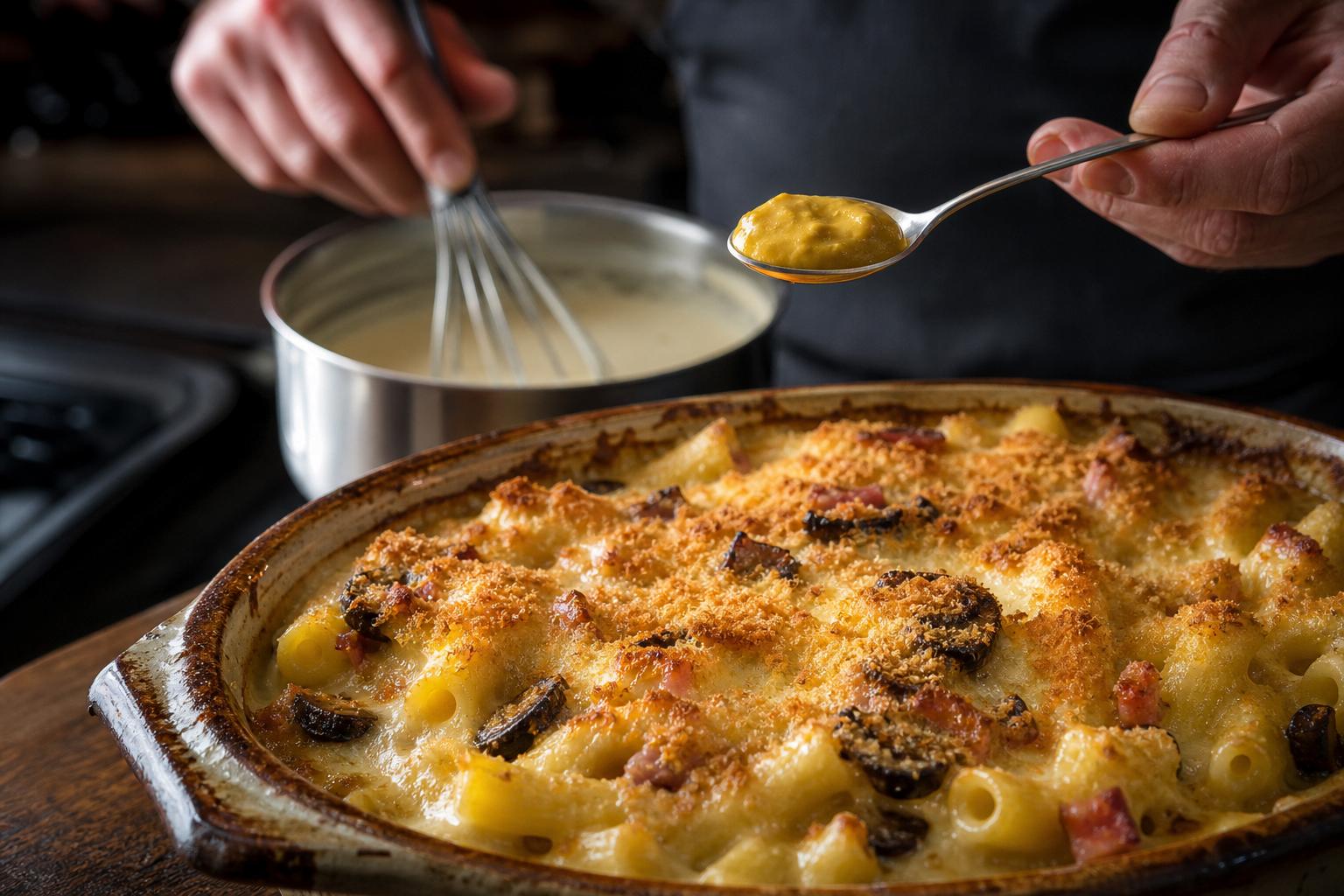
Rushed sauce preparation can ruin a family dish. The chef shares two simple tips for achieving a smooth and flavorful texture.
Baked pasta has that comforting quality of an impromptu meal: it utilizes leftover ingredients, delights everyone around the table, and requires minimal preparation. However, the real magic lies within the sauce. A béchamel that is too thick, grainy, or dominated by flour can quickly weigh down the dish. Cyril Lignac emphasizes that a brief but crucial step can significantly change the outcome.
Don’t rush the roux cooking
The foundation of béchamel is the roux. This mixture is created by heating fat with flour. In this recipe, the chef uses 20 grams each of butter and flour, amounts that are easy to remember for a small family serving.
Start by melting the butter in a saucepan over moderate heat. Then add the flour, whisking the mixture. Many cooks often rush to pour in the milk, fearing that the roux will brown. This is precisely the mistake to avoid.
The butter-flour mixture needs to cook for a moment prior to adding the milk. This waiting period minimizes the floury taste in the sauce.
The flour must be gently heated to lose its raw flavor. The roux should remain light, smooth, and homogenous, not burnt or overly browned. A faint, cookie-like aroma is a positive sign that the mixture is progressing correctly.
Once this base is cooked, gradually add 50 centiliters of milk, preferably at room temperature or slightly warm. Whisk continuously at the beginning, especially within the first few seconds. This technique helps achieve a smooth texture and prevents lumps of flour from forming.
Tips for a lump-free sauce
- Maintain medium heat: high temperatures can cause sticking at the bottom of the pan.
- Add the milk gradually, especially in the initial stages.
- Scrape the edges with a whisk to incorporate all of the mixture.
- Allow the sauce to thicken for a few minutes after the final milk addition.
- Be cautious with salt, as cheese already adds plenty of flavor.
The sauce should coat the back of a spoon without becoming overly thick. It will thicken further in the oven when combined with the pasta and cheese. If it appears too dense on the stove, add a touch more milk before moving on.
The half teaspoon that adds depth
After seasoning with salt and pepper, Cyril Lignac recommends a subtle addition: a half teaspoon of mustard. While it may seem like a small amount, its role is significant. It infuses a hint of brightness into the béchamel without overpowering the dairy flavors.
A half teaspoon of mustard enhances the sauce while allowing the flavor of the cheese to shine through.
Mustard works particularly well in rich gratins, as its slight acidity cuts the richness. A mild mustard blends perfectly. An old-fashioned mustard can add some texture and a rustic touch. If using a stronger variety, a few knife tips may suffice.
This detail is especially beneficial when using a very mild cheese or a rich cream. The sauce gains nuance without the need for more spices. A pinch of freshly grated nutmeg can accompany the mustard but is optional, as its aroma can easily dominate.
Choosing the right cheese for the sauce
Your choice of cheese will influence the desired outcome. Aged Comté brings fruity notes. Beaufort melts beautifully and imparts richness. Swiss gruyère adds a pronounced flavor and a soft texture. Grated Emmental is a practical everyday option.
Grate the cheese before adding it to the warm sauce but do so off the heat or over very low heat. Excessive temperatures can release fat and result in an uneven mixture. Stir until all the strands have completely dissolved.
| Cheese | Effect in the sauce | Suggested pairing |
|---|---|---|
| Comté | Fruity and robust flavor | Mushrooms and pepper |
| Beaufort | Melty and soft texture | Poultry or green vegetables |
| Swiss gruyère | Distinct flavor, good hold | Ham and breadcrumbs |
Transforming leftover pasta into a complete dish
This recipe can utilize leftover cooked pasta like small shells, penne, twists, or macaroni from the previous day. Cold pasta absorbs some of the sauce, making it best to prepare a slightly thinner béchamel. Stir carefully to ensure that every piece is well coated.
Sautéed and sliced mushrooms fit naturally into this dish. They add a vegetable note and prevent a monotonous texture. For a heartier version, consider adding diced ham, roasted chicken, or pre-sautéed bacon.
Transfer everything into a lightly buttered baking dish. Pay close attention to the surface; a thin layer of breadcrumbs provides the expected contrast between the creamy base and a golden top. Optionally, mix the breadcrumbs with a small knob of melted butter for even coloring.
Monitoring the oven time
Preheating the oven to around 200 degrees helps heat the center of the dish and brown the surface. Typically, this will take about 15 to 20 minutes, depending on the depth of your dish and the initial temperature of the pasta. If the pasta is taken directly from the refrigerator, a few extra minutes may be necessary.
The crust should become golden without darkening excessively. If it browns too quickly, place a piece of parchment paper over the top during the final stages of cooking. Conversely, a brief stint under the broiler can help pale breadcrumbs, but keep a watchful eye.
Béchamel may be a simple sauce, but it does not tolerate haste. By allowing the roux to cook gently and incorporating that small bit of mustard, baked pasta dishes gain refinement, even when made with very basic ingredients.