
There are gardening techniques that can truly make a difference. This one may seem deceptively simple, yet it has the power to rejuvenate weary zucchini plants during the summer months. Ever since a market gardener introduced it to me, I’ve enjoyed extended harvests from my plants, sometimes lasting until October.
The best part is, you won’t need any miracle products. A thorough cleaning of the base, a bit of compost, and the plant can thrive again. When the vegetable garden starts to feel tired, this small action can yield impressive results.
Why zucchini fade fast in summer
Zucchini loves warmth, but excessive heat can overwhelm them. During July and August, these plants tire themselves out trying to create leaves, flowers, and fruits simultaneously. Eventually, they show signs of exhaustion.
You can spot it quickly. The lower leaves begin to yellow, blemishes appear, the stems elongate, and production slows down. We sometimes think the plant has reached the end of its life. In truth, it merely needs a genuine boost.
Excess moisture at the base and poor airflow can worsen the situation. Diseases like powdery mildew can take hold more easily. The plant becomes further stressed, and the gardener’s patience wears thin.
The simple action a gardener showed me
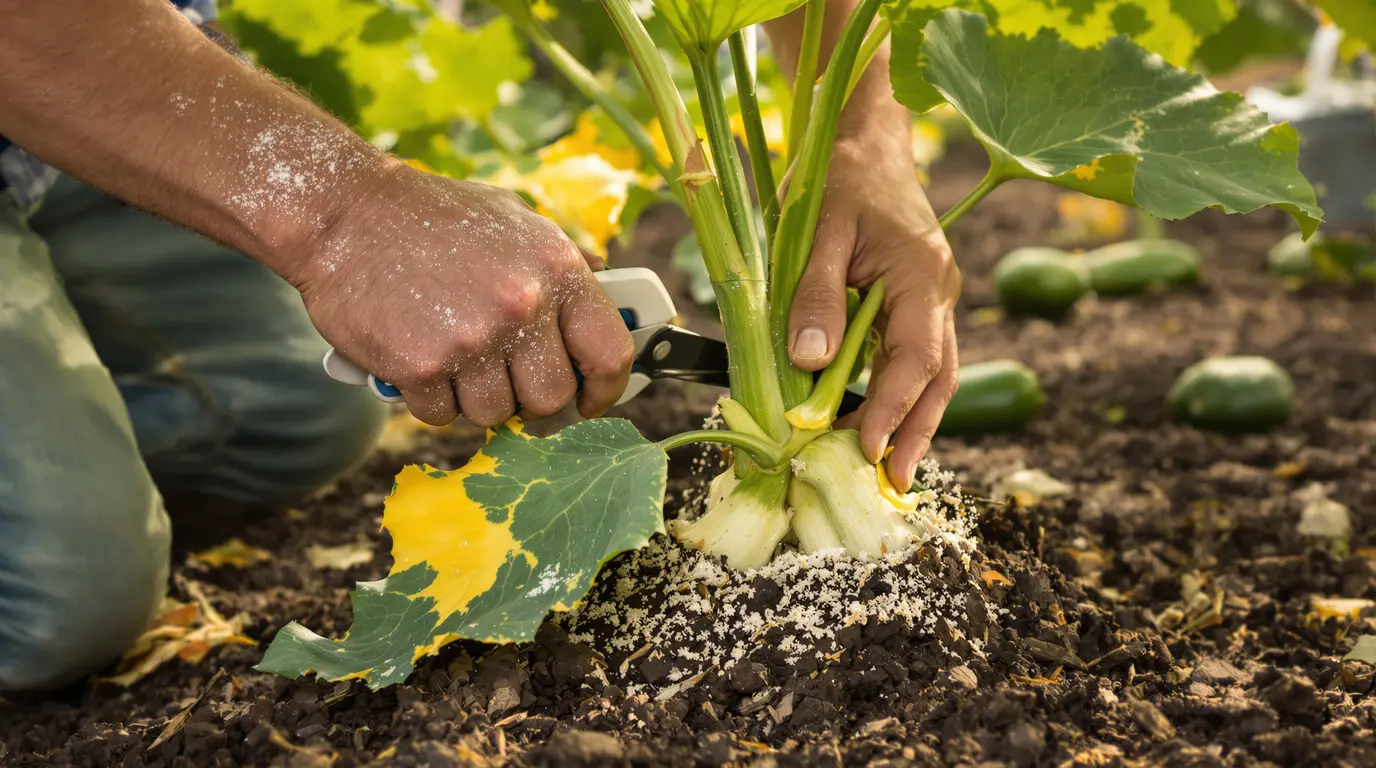
The secret starts with a careful cleaning at the base of the plant. You should remove all the damaged, yellow, dry, or spotted leaves. A clean pair of pruning shears is all you need.
This action might seem harsh, but it actually relieves the zucchini. It improves air circulation around the stem, enabling the plant to conserve energy by shedding leaves that no longer serve a purpose.
The gardener shared a memorable phrase with me: stop feeding what’s already lost. By trimming the old foliage, you allow the plant to focus on new leaves, flowers, and fruits.
How to clean without damaging the plant
Start by examining the base of your zucchini. Identify any leaves that are almost touching the ground, particularly those that are yellowing or looking fatigued. If you notice signs of powdery mildew, be sure to cut away the affected parts.
Use a disinfected pair of pruning shears to prevent the spread of disease. Cut neatly, close to the base, without pulling on the stem. Be gentle -a rough trim can weaken the plant instead of helping it.
Retain only the leaves that are still vibrant and healthy. The idea isn’t to strip the plant completely, but rather to allow for better airflow at the base, not to leave it bare like a broom handle.
The boosting action: hilling with fresh compost
Once the base is cleaned, the fun part begins. You need to add some fresh compost or rich potting soil around the base of the zucchini. Create a small mound around the stem, taking care not to smother it.
This action, known as hilling, does more than just nourish the plant. The zucchini can develop new roots on the buried or covered part of the stem. It’s akin to the plant re-establishing its anchor in the soil.
This new root network enhances water and nutrient absorption. As a result, the plant bounces back, and you will likely see a noticeable difference soon, with more vigorous foliage and new flowers reappearing.
What you need- 1 clean and disinfected pair of pruning shears
- 2 to 4 handfuls of mature compost per plant, depending on size
- A bit of fine soil or potting mix to form the mound
- 1 watering can filled with about 5 to 10 liters of water per plant if the soil is dry
Why this method prolongs harvests until October
- 1 clean and disinfected pair of pruning shears
- 2 to 4 handfuls of mature compost per plant, depending on size
- A bit of fine soil or potting mix to form the mound
- 1 watering can filled with about 5 to 10 liters of water per plant if the soil is dry
Why this method prolongs harvests until October
When a zucchini starts to regrow its roots, it becomes more resilient against heat spikes. It absorbs water more effectively and withstands minor stresses better, leading to renewed production. This is where the magic truly happens.
You may notice young sprouts re-emerging, followed by flowers and then new fruits. Zucchini often remains more consistent and firmer. Instead of stopping abruptly at the end of August, the plants can continue thriving until the first frosts of fall.
This technique is also handy if you’re gardening in poor soil or during particularly dry summers. Instead of dismissing an established plant, you’re giving it a second chance. Honestly, this approach is far smarter than prematurely tearing it out.
Mistakes to avoid for success
Avoid cutting all the leaves at once. The zucchini still needs greenery to nourish its fruits. Focus mainly on removing old, diseased, or low-lying leaves.
Do not use overly fresh or poorly decomposed compost. It should be soft, rich, and odorless. Otherwise, you risk upsetting the roots instead of nurturing them.
Don’t perform hilling when the soil is completely dry. Water it lightly first, then add the compost. The plant will handle this care much better if it’s not already under total stress.
A small maintenance ritual that makes a difference
After this action, check your zucchinis every 4 to 7 days. Remove aging leaves, keep the base clean, and add water as necessary. This simple routine provides substantial support.
You can also mulch around the plant with straw, dry leaves, or well-dried grass. This helps retain moisture and minimizes soil splashes on the leaves. The base remains healthier, and the plant breathes better.
Ultimately, this isn’t just a gardening trick. It’s a new way of viewing the plant. Instead of assuming it’s finished, you help it regain strength. Often, this is when your vegetable garden begins to flourish abundantly.