
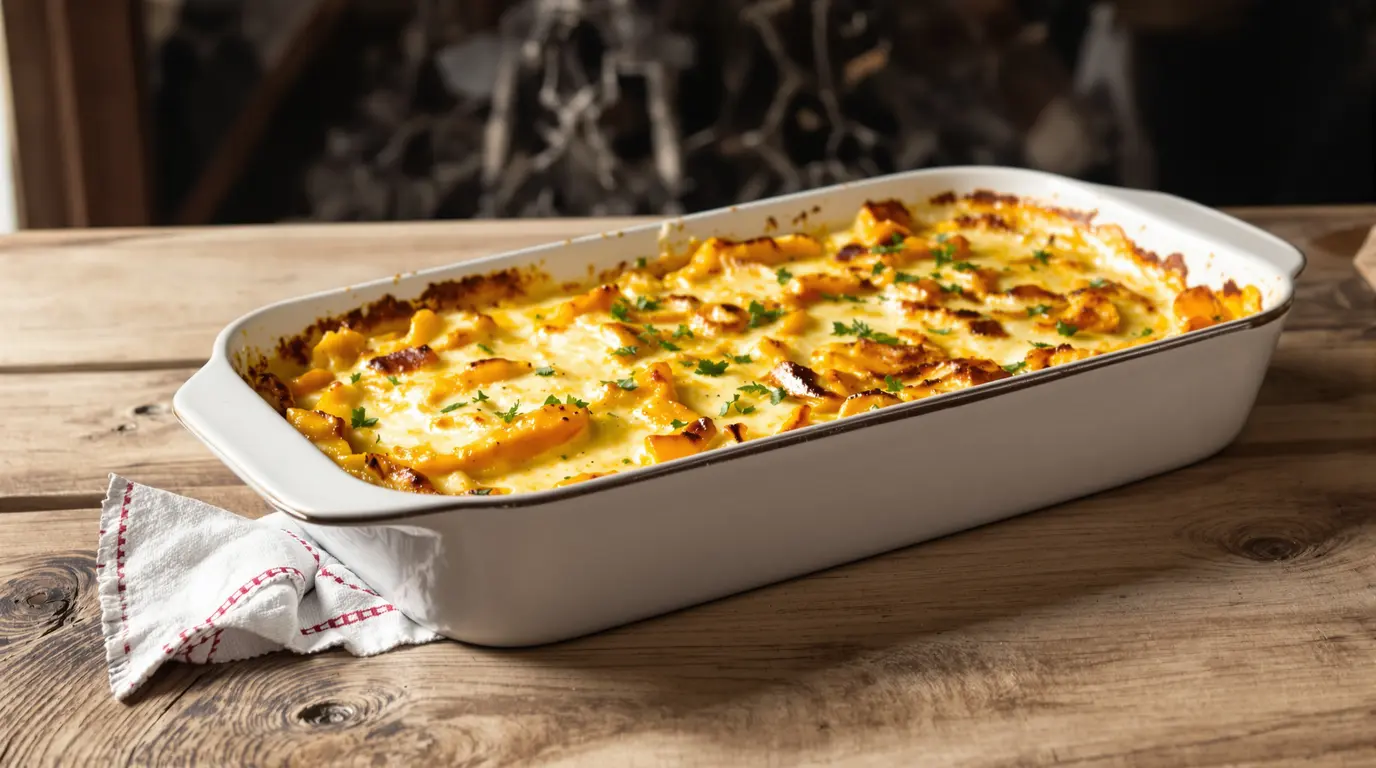
If you love tartiflette but want a gentler version for dinner, the courgiflette made with butternut squash provides a comforting, creamy experience. With its velvety texture and inviting golden hue, this dish is simple to prepare and delights with every bite.
Why choose butternut over potato
Butternut squash is naturally sweet and slightly nutty. When used in a gratin, it becomes beautifully tender and pairs wonderfully with cheese.
In comparison to potatoes, it offers more fiber and a significant amount of beta-carotene. The dish remains indulgent while feeling lighter and more colorful, making it an appealing option for getting children to appreciate squash.
Ingredients for 4 servings
- 1 large butternut squash (1.2–1.5 kg whole, about 800–900 g peeled)
- 1 large yellow onion (approximately 150 g)
- 200 g smoked bacon or 200 g diced ham
- 200 ml heavy cream or semi-thick cream
- 80 ml milk
- 1/2 reblochon (about 220–250 g) or 250 g tartiflette cheese
- 1 garlic clove
- 1 tablespoon olive oil or 15 g butter
- 1 pinch grated nutmeg (optional)
- Salt and freshly ground pepper
- Optional: 40 g grated cheese (emmental, comté) and a few sprigs of thyme
Preparation
Prepare the butternut squash
Start by peeling the butternut using a sturdy peeler. Cut it in half to remove the seeds and slice the flesh into half-moon shapes, about 1 cm thick.
For a really tender gratin, you can pre-cook the butternut in two ways: either steam or boil it in salted water for 8–10 minutes until tender yet firm, then drain well. Alternatively, roast the slices in the oven at 190 °C for 20 minutes with a drizzle of oil to intensify the flavors.
Prepare the tartiflette filling
Finely slice the onion. In a hot skillet with 1 tablespoon of oil, sauté the bacon for 4–5 minutes until lightly colored. Add the onion and cook for 5–7 minutes until softened.
If excess fat is released, remove some from the pan. In a bowl, mix the 200 ml of cream with 80 ml of milk. Stir in the minced garlic, nutmeg, pepper, and a little salt to taste, keeping in mind that the bacon and cheese will add some seasoning.
Assembling the gratin
Preheat your oven to 190 °C (convection if possible). Lightly grease a baking dish of approximately 25 x 30 cm.
Start with a layer of butternut squash at the bottom. Spread half of the onion-bacon mixture on top, followed by half of the cream-milk mixture. Repeat with another layer of butternut, then the remaining onions and cream.
Cut the reblochon in half horizontally to create two discs, then cut into wedges. Place the wedges crust-side up over the entire surface and sprinkle with the optional grated cheese.
Cooking and resting
Bake for 25–30 minutes at 190 °C. The cheese should melt and become golden with some bubbling. If the top browns too quickly, lower the temperature or cover it with parchment paper for the final minutes.
Let it rest for 5–10 minutes outside the oven before serving. This allows the flavors to meld and helps the gratin hold together when sliced.
What to serve with your courgiflette
This gratin is often hearty enough to serve as a main dish. To balance the meal, offer a crunchy salad. A mâche and walnut salad pairs well with the melted cheese.
Raw vegetable sticks add freshness to the plate. For bread, opt for country or whole grain bread. A dry, fruity white wine makes a delightful accompaniment.
Variations and adaptations
- Lightened version: 100 ml cream + 180 ml milk. Replace some bacon with white ham.
- Vegetarian version: substitute bacon with 150 g sautéed mushrooms and 80 g roasted nuts.
- For a heartier dish: add 100 g cooked red lentils between the layers.
- Change the cheese: raclette, mont d’or, or any melting cheese works beautifully.
Tips for a successful gratin
Do not let the butternut squash get too firm after pre-cooking. If it’s too crunchy, it can make the gratin dry. Ensure that the squash is well-drained to avoid a watery sauce.
Taste the filling before adding salt. Adhere to the resting time for a creamy texture and a dish that stays intact when serving. Lastly, serve hot so the cheese is ooey-gooey at the first scoop.