
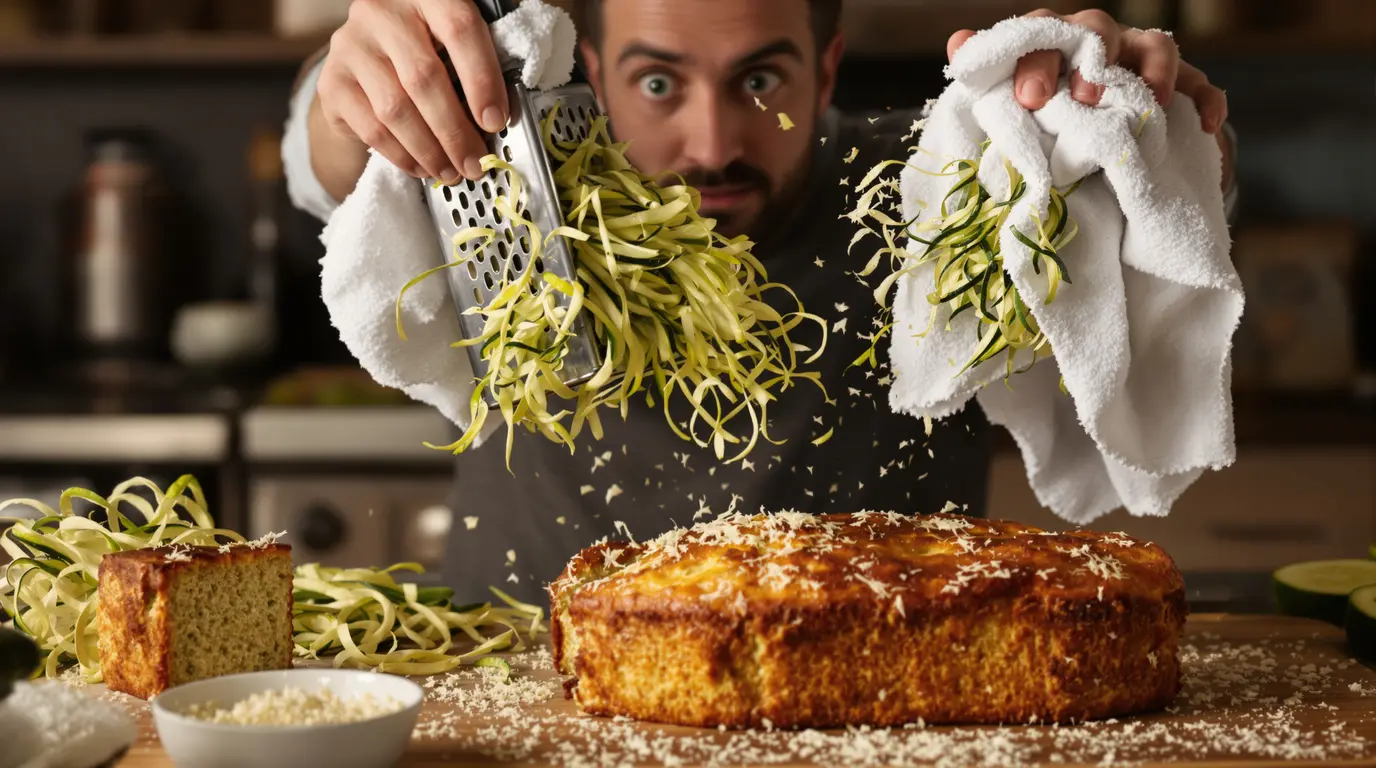
For years, I believed that my zucchini cake was failing because of my oven. The truth is, the issue stemmed from a simple mistake. I was grating the zucchini incorrectly and adding it to the batter without proper preparation. This resulted in a beautifully golden cake on the outside, but with a soggy center.
The invisible trap of zucchini
Zucchini may appear benign and easy to work with, but it conceals a significant amount of water. This is where the cooking process can falter.
If added raw without precautions, this water is released during baking, causing the batter to become soggy. Instead of a fluffy and well-formed cake, you end up with a damp and sometimes sticky crumb.
Interestingly, the problem doesn’t always lie in the recipe. More often, it’s a technical detail that goes overlooked, and this detail makes all the difference.
The grater side that changes texture
A standard grater features several sides, and they do not yield the same results. For a savoury cake, the side with larger holes is the best choice. It produces thicker, more consistent strands that hold up better during baking.
The side with smaller holes transforms the zucchini into a fine pulp. While useful for certain sauces, this texture brings too much moisture into a cake all at once. This makes the batter denser and may lead to uneven cooking in the center.
I have tried both. The difference is striking. With larger holes, the zucchini maintains some structure. With smaller holes, it nearly disappears into the batter, rendering it overly moist too quickly.
Salting and resting step often skipped
Here’s a step that many tend to overlook. Once you have grated the zucchini, it should be lightly salted and allowed to rest. Fifteen minutes is usually adequate, though twenty is better for larger zucchinis.
The salt draws out moisture, which is simple yet remarkably effective. During this resting period, the zucchini releases much of its liquid, keeping this water out of your batter.
This moment can seem unnecessary when you’re in a hurry, but it significantly alters the outcome. Skipping it means retaining moisture in the mixture, while including it results in a firmer, cleaner cake that slices beautifully.
Pressing firmly
Resting alone is not enough. You also need to press the zucchini with vigor. A clean kitchen towel does the trick, or you can use a cheesecloth if you have one.
The goal is straightforward: extract as much water as possible. Don’t settle for a quick, light press. Twist the towel. Apply firm pressure. You will likely be surprised by the amount of water that comes out. This is often the moment when one realizes why their cakes failed in the past.
This pressing becomes a kind of truth test. If the zucchini continues to release a lot of water, it indicates that it wasn’t drained sufficiently. It’s better to take a few extra seconds here than to ruin the entire bake later on.
Parmesan more helpful than you think
Once the zucchini is thoroughly squeezed, it’s time to introduce the Parmesan smartly. It serves not only to enhance flavor but also to provide structure. Its dry nature aids the batter in holding together better.
For a standard-sized cake, 40 g of grated Parmesan is sufficient, but you can use up to 50 g for a more pronounced flavor. It boosts the taste without overshadowing the zucchini.
This ingredient acts as a discreet ally. It makes the crumb more pleasant and balanced. When paired with well-prepared zucchini, it contributes to achieving the sought-after tender yet never soggy texture.
My simple method, now systematic
Ever since I pinpointed the issue, I consistently follow the same steps. I grate the zucchini using the side with larger holes, lightly salt it, and let it rest for at least 10 to 15 minutes.
Then, I press it firmly with a towel before adding it to the batter. This little sequence changes everything. The cake bakes better, slices beautifully, and stores longer.
If you’re pressed for time, there’s another option. Sauté the zucchini for a few minutes before incorporating it into the batter. This will help them lose some moisture. It’s a simple and very effective tip.
An easy recipe to ensure success
Here’s a straightforward base for a zucchini cake that holds its shape well. For 6 servings, you will need:
- 2 medium zucchinis, about 400 g
- 3 eggs
- 150 g of flour
- 1 packet of baking powder, about 11 g
- 80 ml of olive oil
- 80 ml of milk
- 40 g of grated Parmesan
- A pinch of salt
- Black pepper to taste
Start by grating the zucchinis. Lightly salt them and let them rest for 15 minutes. Then, press them well in a clean kitchen towel. In a mixing bowl, whisk together the eggs, olive oil, and milk. Add the flour, baking powder, Parmesan, salt, and pepper.
Gently fold in the well-drained zucchini. Mix together without overworking. Pour the mixture into a greased or lined baking pan. Bake at 180 °C for 40 to 45 minutes. The top should be golden and a knife should come out almost clean.
The true secret revealed
It is often believed that a successful cake primarily relies on its ingredients. However, the texture also hinges on how the vegetables are prepared. Zucchini can be misleading. While it seems gentle and straightforward, mishandling it can silently sabotage the whole dish.
Since I’ve been grating on the right side, salting, and pressing, my cakes have been consistently perfect. No more soggy centers or unpleasant surprises when slicing into the first piece. This truly enhances the enjoyment at the table.
Sometimes, all it takes in the kitchen is a small, correct action to set everything right. In this case, that action is crucial.