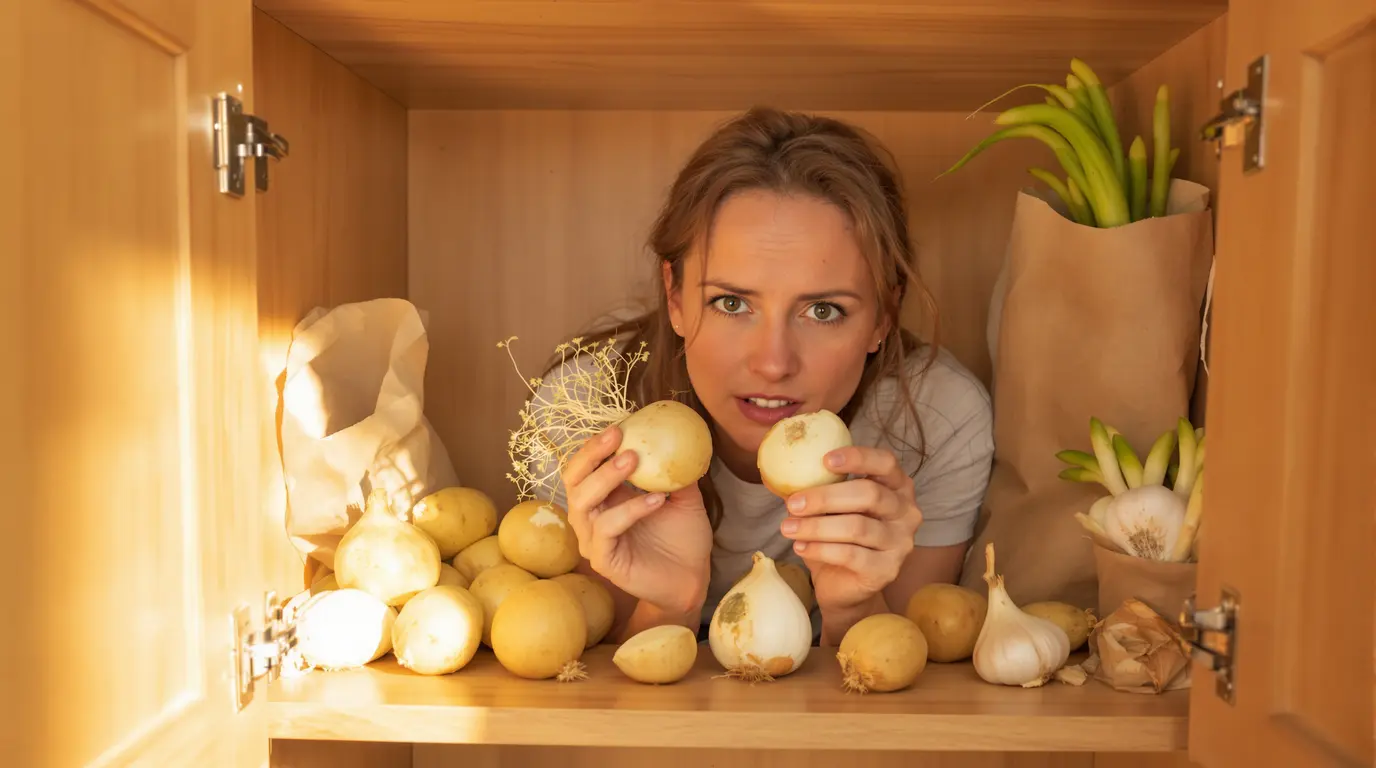
You open your pantry, and there’s a surprise waiting. Sprouting potatoes, a soft onion, and a head of garlic with little green shoots. Should you toss them out, or are they still safe to eat? The answer can vary, which is what makes it so surprising.
When a vegetable sprouts, what happens
A sprouting vegetable is not necessarily a lost cause. It is simply trying to grow again. This is what happens with potatoes, onions, and garlic when they sit too long in a warm, humid, or bright environment.
However, be cautious. Sprouting can alter their taste, texture, and sometimes their quality. In certain cases, it might also indicate that you need to handle them with care before cooking.
Sprouted potatoes: some may still be good
The sight of a sprouted potato can be alarming, and rightly so. When potatoes sprout, they can produce more solanine, a naturally occurring substance that can be toxic in large amounts.
If a potato has just a few small sprouts, remains firm, and hasn’t turned green, it is often still safe to eat. In this case, simply remove the sprouts, cut away any damaged areas, and peel more generously than usual.
On the other hand, discard it if it is green, very soft, wrinkled to the point of being hollow, or has an unpleasant smell. A heavily sprouted potato often no longer has anything good to offer.
The real red flag is the green color. A green patch on the skin is a genuine warning sign. In such cases, it’s better not to take any chances.
Sprouted onions: often still usable
Good news! A sprouted onion is often still edible if the bulb is firm and healthy. The sprout inside can be removed; it may intensify the flavor and make it slightly bitter, but it doesn’t make the onion dangerous on its own.
Cut the onion in half and examine it closely. If the inside is healthy, without black spots or mold, you can generally use it in cooking. An onion like this will work perfectly in a soup, stir-fry, or stew.
Throw it away if the flesh is soft, wet, black, or emits a strange odor. In this case, it is not just sprouting; it is a clear sign of spoilage.
Sprouted garlic: edible, but less pleasant
A sprouted garlic clove doesn’t need to be discarded. If it is still firm, you can often cook with it. Just remove the green sprout in the center, especially if it is sizable, as it can impart a pronounced bitterness.
The main issue with sprouted garlic is not its safety but its taste. The more developed the sprout, the spicier and less pleasant the garlic becomes. However, in a sauce or a slow-cooked dish, this might be less of a problem.
If the garlic is mushy, moldy, or as dry as cardboard, it’s best to let it go. It’s wiser to pick up a fresh piece than to risk ruining a recipe with tired ingredients.
How to decide if you should keep or throw something
Before making a decision, do a quick inspection. Check the color, feel the texture, and smell it. Often, in just a few seconds, you can tell if the vegetable is still good to use.
- Keep if the vegetable is firm and free of mold.
- Monitor if it has only a few sprouts or small dry areas.
- Throw away if it is soft, black, slimy, deeply green, or smells bad.
This small habit can prevent much waste and also keep you from cooking with ingredients that won’t deliver anything good on your plate.
The best practice to prevent this from happening again
To avoid having your potatoes, onions, and garlic sprout too quickly, proper storage is key. Keep them in a dry, dark, and well-ventilated space. Storing them near the oven or on top of the fridge is not ideal.
Avoid using closed plastic bags as they trap moisture and worsen the issue. A basket, a paper bag, or a well-ventilated crate usually work much better.
Also, do not store potatoes with onions. They can interfere with each other, causing both to age faster. When kept separate, they usually last longer.
In the kitchen, what to do with those that are still good
If your vegetables are still good, use them soon. A slightly sprouted potato can be turned into mashed potatoes, soup, or gratin after removing any questionable parts. A sprouted onion works great in a hot dish.
As for sprouted garlic, it remains valuable in broths, tomato sauces, or slow-cooked meals. Heat and time often mellow its stronger flavor, making it a good way to limit waste without unnecessary risk.
However, if you truly have doubts, trust your instincts. A vegetable should inspire you to cook, not cause worry. When uncertainty is too great, the trash or compost bin may be the wisest choice.
A simple summary to remember
Sprouted potatoes require more caution. Sprouted onions are often still usable. Sprouted garlic can also be kept if it remains firm and healthy.
The real sorting boils down to three simple questions. Is it firm? Is it healthy? Is it still enjoyable to cook with? If the answer is yes, you can usually save it. If not, it is better not to take chances.
Ultimately, remember this important point. Sprouted does not always mean it should be thrown out. However, sprouted does not guarantee that it is still good to eat either. With a little care, you can minimize waste without taking unnecessary risks.