🇫🇷 Practical information in France
- Noirmoutier potatoes are a premier Vendée product, primarily available in spring and often priced higher than standard varieties.
- Edible seaweeds can be found in health food stores, Japanese grocery stores, or the seafood section, either dried or brined and specifically intended for consumption.
- Harvesting seaweed along the coast is regulated in France, particularly for sanitary reasons and environmental protection; it is advisable to check local guidelines before foraging.
- For equipment, this technique requires nothing more than a Dutch oven or thick-bottomed pot with a well-fitting lid, which is commonly found in most kitchens.
A culinary selection encourages stepping out of routine with unexpected pairings, including potatoes dressed in seaweed.
Some dishes might initially seem reserved for gourmet settings. However, they often rely on common ingredients and precise cooking techniques. The example from Noirmoutier illustrates this beautifully: small potatoes, seaweed, and steam create a dish that resembles pebbles found on the shore.
Potatoes that resemble pebbles
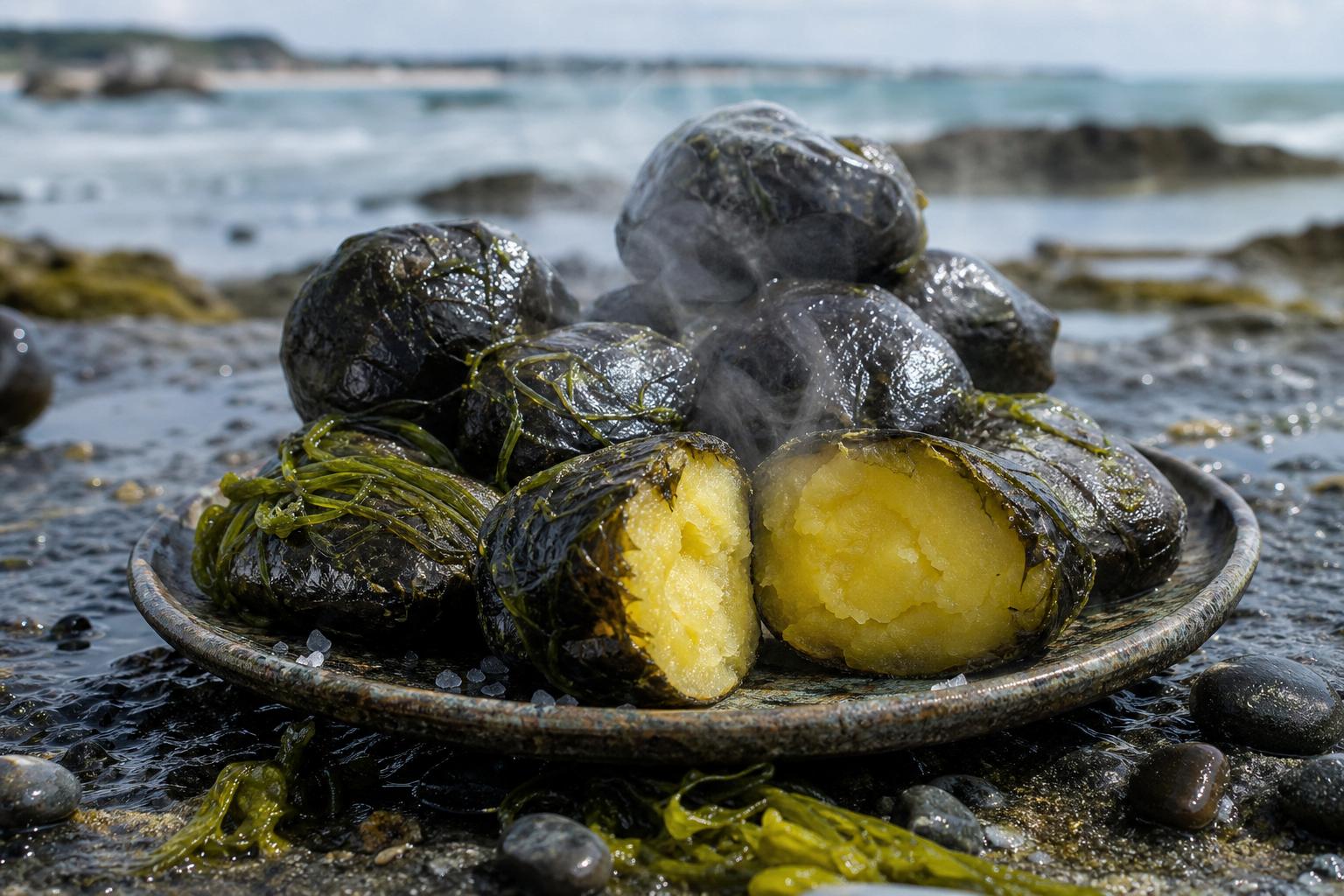
The preparation highlighted here draws inspiration from Alexandre Couillon, chef at La Marine restaurant located at the Herbaudière harbor in Noirmoutier. His concept emphasizes both visual appeal and texture. Ultimately, the potatoes no longer appear as a classic side dish; they evoke smooth stones gathered from the water’s edge.
This appearance comes from a crust of seaweed. The marine plants envelop the tubers during cooking, imparting a briny note. The effect is intentionally deceptive. One might think they see a dark stone, but cutting into it reveals the tender flesh of the potato.
The cooking is done without added fat: steam retains the product’s moisture, resulting in particularly tender flesh.
Choosing the right product matters. Noirmoutier’s small potatoes are ideal for this technique due to their thin skin and uniform size, which contribute to even cooking. They also hold their shape well when surrounded by seaweed.
Steaming: a simple but precise technique
Steaming involves sealing foods in a covered pot over low heat or in the oven. The natural moisture in the ingredients turns into steam. This steam circulates under the lid, minimizing drying out and concentrating flavors.
In this preparation, the seaweed serves more than just a decorative role. It protects the potatoes while imparting its aroma. However, moderation is key: some seaweeds have a pronounced salty flavor. A quick rinse is often beneficial if they come from the sea or a brined preparation.
Key tips for the kitchen
- Choose small potatoes of similar size to avoid uneven cooking.
- Wash them carefully without necessarily peeling.
- Use identified edible seaweeds specifically designated for consumption.
- Seal the pot properly to maintain steam.
- Check for doneness with a knife point after about twenty minutes.
- Salt cautiously, as the seaweed already contributes a marine flavor.
A Dutch oven, pot, or thick-bottomed saucepan with a snug lid works well for this technique. A small amount of water at the bottom prevents sticking when starting. The food should not be submerged; steam should be the main cooking mechanism.
Nine ideas to shake up everyday dishes
This selection is rooted in the belief that culinary curiosity can transform an ordinary meal without complicating it. The potato-seaweed combination serves as a prime example. Other ideas are based on the same principle: start with a familiar ingredient, then switch up the cooking method, shape, or seasoning.
These suggestions aim not to conceal the ingredients but to emphasize contrasts: hot and cold, sweet and savory, crunchy and soft. An unusual pairing becomes convincing when it strikes a balance. A splash of acidity, such as lemon or vinegar, can lighten a rich dish. Conversely, a creamy element softens very vegetal or bold flavors.
Seaweed: a marine condiment to master
In cooking, edible seaweeds come in various forms: fresh, dried, flaked, or salted. Wakamé, dulse, and nori are among the most popular varieties. They impart a briny flavor, sometimes smoky, and offer an umami-like sensation.
Umami describes a deep flavor often linked to broths, mushrooms, ripe tomatoes, or aged cheeses. Seaweeds can enhance this perception without adding heavy sauces. A sprinkle in a purée, vegetable soup, or salted butter can often be sufficient.
With seaweeds, it is best to start with small amounts: their robust aroma can quickly dominate the rest of the dish.
Those with thyroid issues should be cautious, as some seaweeds contain significant amounts of iodine. Occasional moderate consumption is generally not a concern compared to daily use, but it is wise to consult a healthcare professional for specific dietary needs.
A dish that highlights a region
This seaweed-crusted potato also tells a geographical story. Noirmoutier is known for its vegetable productions and close ties to the ocean. Bringing together a local tuber and marine plants is to unite two elements from the same landscape.
To serve this dish, a simple light herb cream, pan-seared fish, or seasonal vegetables can suffice. The potatoes take center stage. Their pebble-like appearance delights guests, while the gentle cooking method reminds us that a great culinary idea does not always rely on a long list of ingredients.