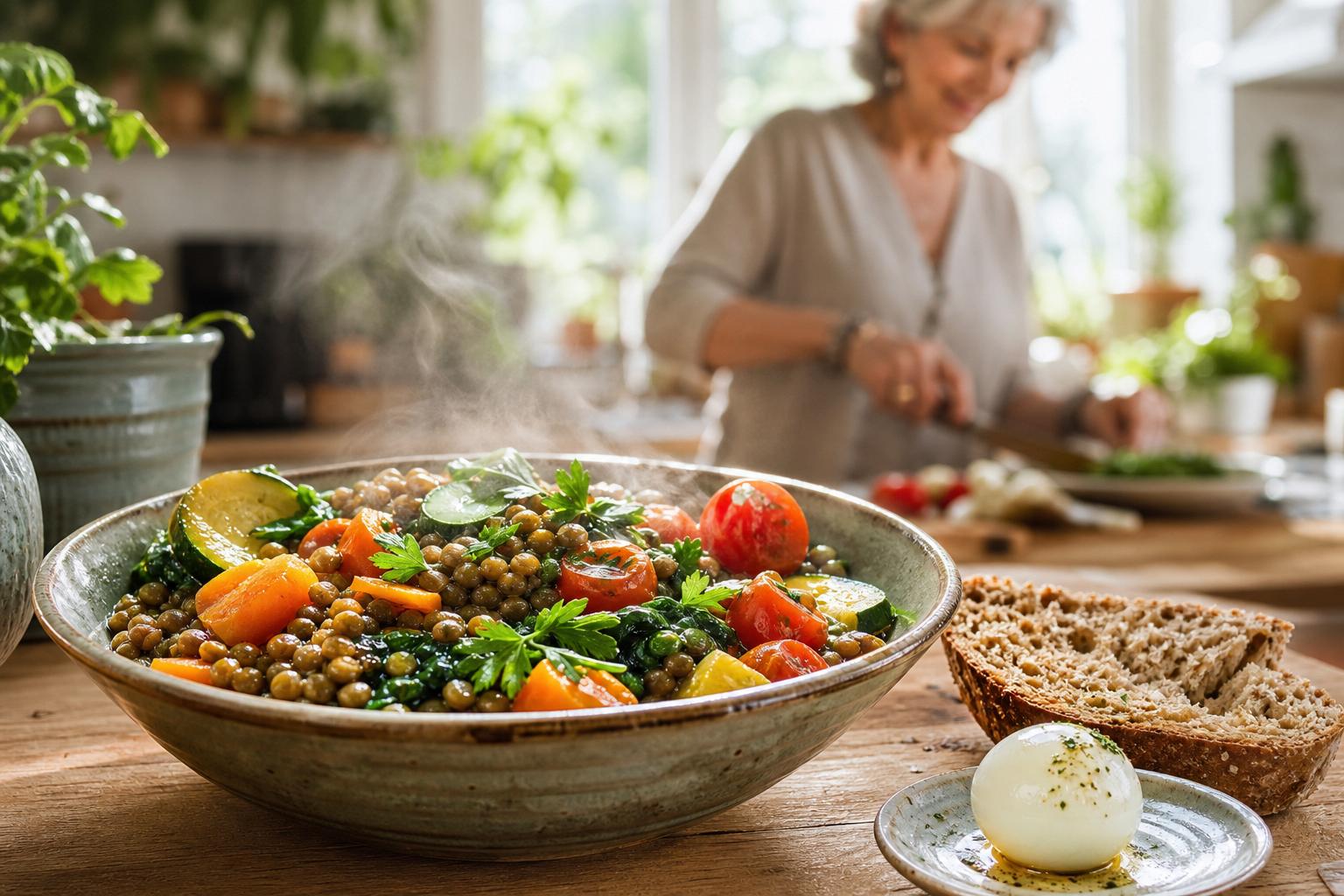
As lunchtime arrives in a kitchen that may still be a bit cool, the soft aroma of sautéing onions in olive oil can awaken appetites. On the table sits a simple dish: lentils, carrots, a handful of spinach, and a slice of whole-grain bread. After turning 60, many look for miraculous powders, the latest supplements, or exotic “superfoods,” while this familiar meal already supports muscle health. The nutritionist advocating for it underscores a key point: maintaining strength is not just a gym endeavor but also starts on your plate, bite by bite. And this simple meal has more to it than meets the eye.
After 60, muscles need consistency, not flashy promises
We all know that moment when climbing two flights of stairs feels a bit tougher than before or when carrying grocery bags strains our arms more than it used to. Age-related muscle loss, often termed sarcopenia, can begin quietly in our fifties and become more apparent after 60. While it’s not inevitable, it requires simple attention: regular movement and sufficient protein, energy, and micronutrients.
A bowl of cooked lentils boasts an average of 8 to 9 grams of protein for every 100 grams, alongside beneficial fiber, iron, magnesium, and potassium. By adding colorful vegetables, a splash of olive oil, and potentially an egg, some fish, or yogurt for dessert, the meal becomes especially nutrient-rich. It isn’t a celebrity-endorsed menu, and that’s precisely why it can be easily repeated.
Lentils alone cannot fulfill all muscle needs as their proteins perform better when paired with grains, whole-grain bread, or complementary animal or plant sources. Their power lies in the whole: plant proteins, slow-releasing carbohydrates for energy, fibers for fullness, and essential minerals for muscle function. A well-nourished muscle does not require complicated nutrition.
Why olive oil and vegetables truly make a difference
The seemingly trivial detail -olive oil -has an important role: it not only adds flavor to lentils. Its unsaturated fats fit naturally into a Mediterranean diet, often linked with better cardiovascular health and overall dietary quality. Maintaining a healthy heart and circulation supports daily activity, helping to sustain movement and, by extension, muscle maintenance.
Vegetables provide what protein powders may lack at times: the act of chewing, vitamins, antioxidant compounds, and a genuine presence in the meal. Bell peppers, tomatoes, or kale, for example, are rich in vitamin C, boosting the absorption of plant-based iron from lentils. Let’s be honest: nobody follows a precise laboratory diet daily. A carrot, a zucchini, and a handful of herbs will do just fine.
The nutritionist also emphasizes that a protective meal does not act in isolation, as if it were a magical shield served in a bowl.
“After 60, the best meal for muscles is often one that is easy to prepare, enjoyable to eat, and that can be repeated several times a week,” she summarizes.
To further enhance this dish, here are some simple guidelines for portion sizes:
- A base of lentils: aim for about 150 to 200 grams of cooked lentils for a main meal, depending on hunger and activity levels.
- At least two vegetables: one soft, like carrot or zucchini, and one leafy, such as spinach or green beans.
- A tablespoon of olive oil added at the end of cooking or in the seasoning, without overwhelming the dish.
- A protein complement if needed: an egg, tuna, a piece of chicken, firm tofu, or a bit of fresh cheese.
- A small portion of whole grains, especially on days filled with walking, gardening, or strength training.
The real reflex: cook a meal you want to repeat
The most practical approach is to prepare a large pot of lentils with vegetables for two or three meals. Sauté an onion in olive oil, toss in diced carrots, add pre-cooked lentils, a bit of broth, herbs, and spinach at the end. In less than twenty minutes, you’ll have a satisfying base that can be enjoyed hot, warm, or cold the next day.
A common mistake is to think about protein only at dinner, after a day of coffee, toast, and light snacks. As we age, spacing out protein intake across meals may be wiser than concentrating it at night, especially if appetite diminishes. A well-constructed lentil lunch can help prevent arriving exhausted at the next meal and evade unhealthy snacking that fills without truly nourishing.
However, be cautious about sudden changes if legumes are not common in your diet or if you have a sensitive digestive system. Start with a small portion, rinse canned lentils, chew slowly, and gradually increase the amounts over the weeks. If you have kidney issues, malnutrition, specific medical treatments, or unintentional weight loss, consulting a doctor or dietitian before making significant dietary changes is advisable.
A humble dish that places strength at the center of daily life
This dish of lentils, vegetables, and olive oil does not promise to turn back time in two weeks, and that is likely what makes it credible. It reminds us that after 60, preserving muscle relies on less glamorous actions than advertisements depict: cooking, eating sufficiently, taking a few extra steps, standing up often, carrying light loads, and enjoying mealtime. Strength is built in this nearly invisible repetition.
There is also comfort in a recipe that is inexpensive and adaptable with what may remain in the vegetable crisper. A handful of red lentils for busy days, green lentils for a salad, frozen vegetables when the market is too far: the idea remains the same. The best plate is often one that naturally finds its way back into the weekly rotation.
Perhaps the true question is not which food deserves the title of superfood, but which meal genuinely helps maintain independence, allowing for continued walks, travels, gardening, or playing with grandchildren. Each person can tailor this recipe to their preferences, budget, and health needs. In many kitchens, a simple pot of lentils may become a highly effective act of prevention.
| Key point | Detail | Reader advantage |
|---|---|---|
| Plant proteins | Lentils provide about 8 to 9 g of protein for 100 g cooked. | A simple support for meeting daily protein needs. |
| Varied vegetables | They add fibers, vitamins, and antioxidant compounds. | A more satisfying and complete meal. |
| Olive oil | It provides unsaturated fats and enhances the dish’s flavor. | An easy habit to adopt for a balanced diet. |