
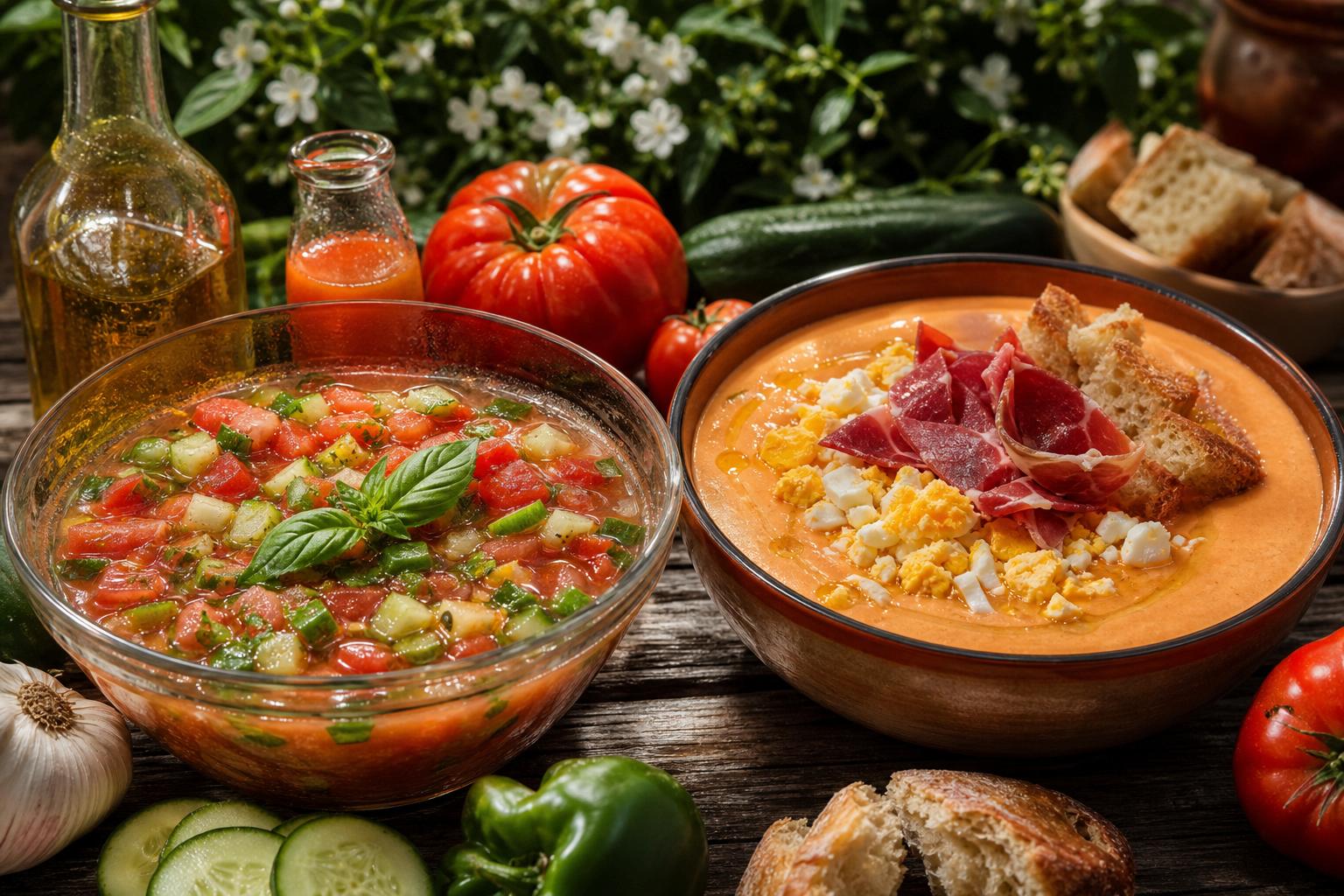
Light, easy to prepare, and packed with vegetables, these Southern specialties are a delight during hot weather when appetite tends to wane.
At first glance, both dishes may appear similar, featuring tomatoes, garlic, olive oil, and bread in their traditional recipes. However, their textures, nutritional content, and roles in a meal differ significantly. One is often enjoyed as an appetizer or starter, while the other can serve as a more substantial dish, especially when garnished appropriately.
Two recipes stemming from the same sun-kissed ingredients
These two chilled specialties share a lovely Mediterranean base. Tomatoes take center stage, complemented by garlic, extra virgin olive oil, and, depending on the preparation, bread crumbs. They offer hydration, fiber, vitamins, and minerals -ideal benefits for sweltering days.
The first recipe resembles a refreshing soup made from pureed raw vegetables. It usually includes cucumber, bell pepper, and a splash of vinegar, maintaining a thin consistency that makes it perfect for serving in a glass, bowl, or even a small bottle for picnics.
The second recipe is thicker, situated somewhere between a cold cream and a very smooth purée. It incorporates more bread and olive oil, resulting in a rich, almost velvety texture that satisfies hunger more effectively.
The differences extend beyond flavor; the amounts of bread, oil, and vegetables also affect the dish’s nutritional density.
The lightest soup focuses on water and vegetables
The more fluid version contains a greater variety of vegetables and water, typically showcasing fewer calories per serving since it features less bread. Its generous inclusion of cucumber, bell pepper, and tomatoes adds to its refreshing quality.
This soup can be enjoyed as a starter, a savory snack, or a side dish for a summer meal. However, it does not always replace a full lunch. To create a more balanced plate, consider adding a protein source and a carbohydrate to match your appetite, such as eggs, fish, chickpeas, whole grain bread, or salty cottage cheese.
An ally during hot weather
The vegetables used in these recipes are naturally high in water content, with tomatoes consisting of about 95 percent water. While it is essential to hydrate regularly, cold soup can also contribute to daily hydration needs.
This dish is rich in potassium, vitamin C, folates, and plant pigments. Served chilled, it often helps maintain a varied diet when hot meals become less appealing.
- Choosing this soup as a starter boosts the vegetable content of the meal.
- Pouring it into an insulated bottle makes it easy to carry.
- Adding fresh herbs enhances flavor without relying on salt.
- Ensure proper cooling during storage to minimize heat-related risks.
The creamy preparation can make a complete meal
The denser recipe offers more carbohydrates from the bread, along with higher fat content from the olive oil. These components are not drawbacks; rather, they simply make the dish more nourishing. When paired with a protein portion, it can serve as the basis for a simple lunch.
Traditional toppings like crumbled hard-boiled egg or diced ham increase the satiety factor. For a vegetarian twist, try smoked tofu cubes, lentils, or white beans. A handful of chopped almonds adds crunch but can also elevate the calorie count quickly.
A thick preparation with bread, olive oil, and an egg can serve as a simple meal, while a more liquid soup fits well as a starter.
Bread is not an ingredient to avoid
Removing bread lightens the recipe and decreases density. This adjustment may appeal to those seeking a very fluid texture or watching their carbohydrate intake, but it is not necessary for everyone.
In a balanced meal, bread provides energy. Its value depends on the quantity used, the overall menu, and individual needs. Whole grain or sourdough bread can add flavor and fiber. Care should be taken to ensure that a recipe termed as light doesn’t become overly greasy from excessive oil.
Smart shopping tips
Pre-made versions can be convenient for a day at the beach, at work, or while traveling. However, not all options are created equal. The most useful tip is to read the ingredient list: it should be short and resemble what you would use in your own blender.
| Preferable | To watch out for |
|---|---|
| Tomatoes and vegetables as primary ingredients | Unnecessary added sugar |
| Extra virgin olive oil or olive oil | Lower quality oils or unspecified oils |
| A straightforward recipe without a long list of additives | Excess salt |
| Proper refrigeration | Products left at high temperatures |
Extra virgin olive oil stands out for its rich content of monounsaturated fatty acids and phenolic compounds. These substances are known for their antioxidant effects and role in cardiovascular protection. They are part of a holistic dietary approach; no single ingredient can compensate for an unbalanced diet.
Tomato and olive oil: an interesting pairing
Tomatoes contain lycopene, the pigment responsible for their red hue, which has antioxidant activity. Scientific studies link regular consumption of tomato-based products with several positive markers for heart health, although no single food offers sole protection against disease.
The presence of oil aids in the absorption of certain fat-soluble compounds, which is why a reasonable amount of olive oil fits perfectly into these recipes. The key lies in balancing the quantity; often, just a well-measured spoonful is enough to impart flavor and creaminess.
A simple precaution for summer meals
Since these dishes contain raw ingredients and are eaten cold, they should be refrigerated after preparation and consumed quickly. For transportation, an insulated bag with a cooling block is preferred, especially on hotter days.
At home, making a large batch can save time. Just divide the soup into clean containers, keep toppings separate, and add them right before serving. This keeps the texture pleasant and prevents eggs, ham, or croutons from getting soggy.