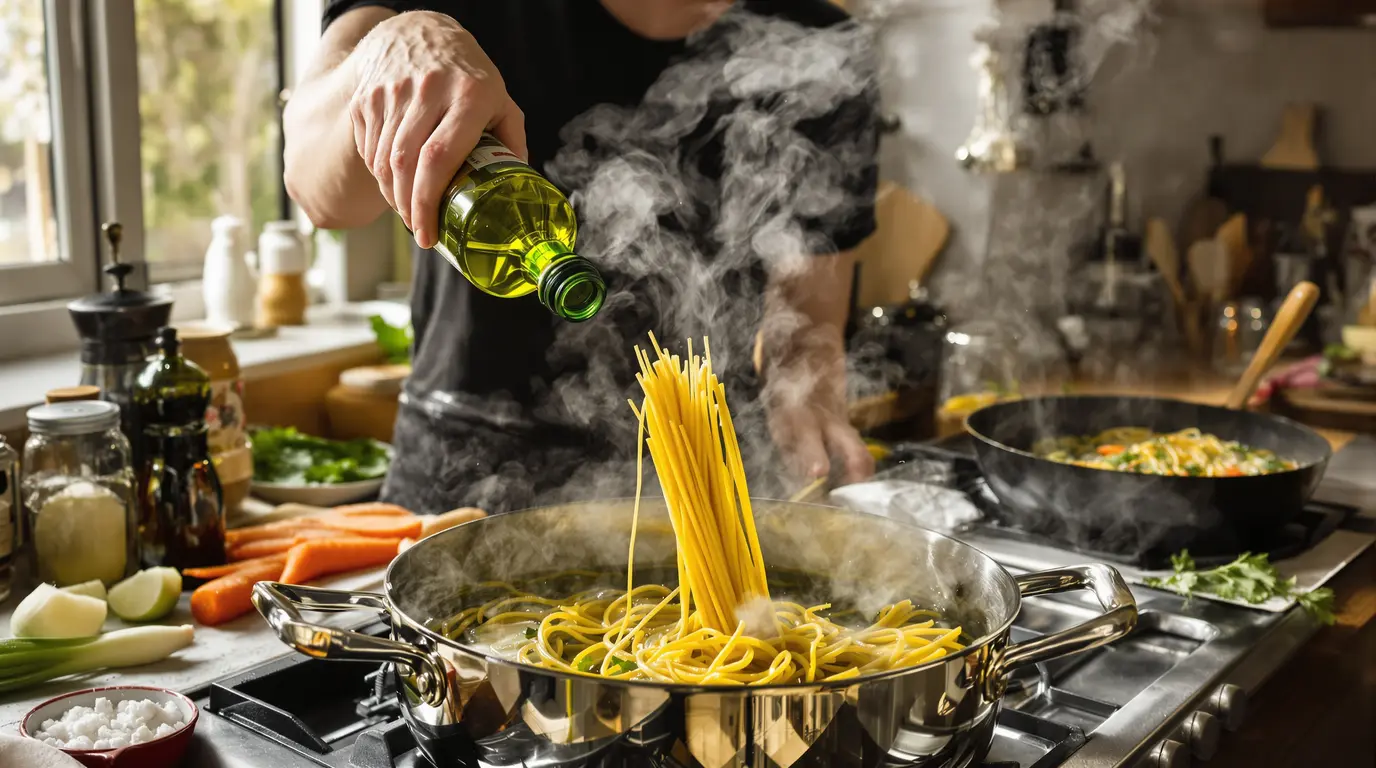

In France, many still add a drizzle of oil to their pasta water. This act seems practical and reassuring. However, it often raises eyebrows in Italy.
Why this habit frustrates Italians
In Italy, cooking pasta follows a straightforward principle. The water should remain pure, containing only salt and pasta. Oil has no place in the pot, as it does not prevent sticking.
For Italians, pasta is a serious dish. It deserves attention and care, not just an old habit passed down through kitchens. It is not a trend; it is based on genuine culinary reasoning.
What oil really does in water
The issue is simple. Oil floats on top of water and does not mix in. As a result, it hardly coats the pasta during cooking.
Sticking occurs mainly due to starch released by hot pasta. If the pieces clump together, it is not due to a lack of oil. It is often because of insufficient water, inadequate stirring at the start, or lack of attention at the right moment.
There is another downside. A thin film of oil can obstruct the sauce later on. Instead of clinging to the pasta, it slides off, leading to a loss of flavor and creaminess.
The true Italian method for cooking pasta
The correct method is almost disarmingly simple. You need plenty of water, the right amount of salt, then add the pasta without oil. That is all. Yet, every detail matters.
Here are the key points to remember:
- about 1 liter of water for every 100 g of pasta
- 7 to 10 g of salt per liter of water
- add the pasta only when the water is rapidly boiling
- stir immediately in the first few seconds of cooking
The stirring moment is crucial. The first 2 to 3 minutes are the most sensitive, when pasta is most likely to stick together. After that, just keep an eye on the cooking time indicated on the package and taste periodically.
The goal is to achieve pasta cooked al dente. This means the pasta should be tender while still having a slight firmness in the middle. This small detail makes all the difference.
Why many French still add oil
This reflex often stems from a simple fear: the fear of ruining a meal. A pot that is too small, a ringing phone, forgetting to stir, and suddenly the pasta is stuck together. Thus, the idea is to protect the dish with oil.
This transmission effect also plays a role. When a trick is repeated by a grandmother, then passed on to a mother, and finally to a rushed student, it can start to feel true, even if it does not really help.
In reality, this habit offers more reassurance than benefit. This is where the myth continues to thrive.
Simple actions to avoid sticking pasta
If you want better pasta, there is no need to complicate things. Just a few simple actions will do. They may seem ordinary, but they change everything.
- use a large pot
- ensure there is enough water for the pasta to move freely
- add salt only once the water is boiling
- drop the pasta in only when the water is actually bubbling
- stir right at the start of cooking
- drain without waiting too long
The most important point comes right after. Do not let the drained pasta sit in the colander. This is often when they clump together. Instead, mix them quickly with the sauce while still hot.
The most important secret: uniting pasta and sauce
In Italy, pasta is not served separately from the sauce. They finish cooking together in the pan. This small act makes a significant difference.
When the pasta is drained, add it to the hot sauce, followed by a scoop of cooking water. This water contains starch and helps to bind the sauce, making it smoother, shinier, and more enveloping.
The end result is far more delicious. Each piece of pasta receives a nice coating of sauce. There is no need for cream or flour. It is simple, natural, and much more effective.
Easy winter spaghetti with vegetables recipe
Here is a comforting recipe to practice this method. It is straightforward, without cream or oil in the water. Oil is only used for the pan.
Ingredients for 2 to 3 servings
- 300 g of spaghetti
- 1 medium leek
- 2 carrots
- 1 onion
- 2 cloves of garlic
- 200 ml of plant-based milk
- 1 tablespoon of nutritional yeast
- 2 tablespoons of olive oil
- fine salt
- pepper
- a pinch of nutmeg
Preparation
Bring a large pot of water to a boil. Use about 3 liters of water for 300 g of pasta. When the water is boiling, add 3 tablespoons of salt.
Meanwhile, wash the leek. Peel the carrots and the onion. Chop them into small pieces, and mince the garlic.
Heat 2 tablespoons of olive oil in a large pan. Add the onion and garlic. Sauté for 2 to 3 minutes. Then add the leek and carrots. Season lightly with salt and cook for 8 to 10 minutes over medium heat.
Once the water is boiling actively, add the spaghetti without any oil. Stir immediately. Cook according to the package instructions, removing the pasta one minute earlier. Stir one or two more times during cooking.
Add the plant-based milk to the pan with the vegetables. Stir in the nutritional yeast, nutmeg, and a bit of pepper. Let it simmer for 4 to 5 minutes. The sauce should become slightly creamy.
Reserve a ladle of cooking water, about 100 ml. Drain the pasta quickly. Then add it to the pan and mix, adding a bit of cooking water and stirring on low heat for 1 to 2 minutes.
Taste and adjust salt and pepper if needed. Serve immediately, adding a bit more nutritional yeast if you like a savory touch.
Common mistakes to avoid
If your pasta is sticky or the sauce seems bland, the issue often comes down to a simple detail. It is not a matter of talent; it is usually about technique.
- Not enough water: pasta needs space to move
- Not enough salt: they taste flat
- No stirring at the beginning: they stick together
- Too long draining: they clump in the colander
- No cooking water in the sauce: the binding is less effective
- Rinsing after cooking: the sauce adheres less effectively
When you correct these actions, the results change quickly. Your pasta will end up cleaner, tastier, and even a little more Italian.
The little detail that can change everything at the table
The next time you prepare pasta, try cooking without oil in the water. Just keep a large pot, salt, a good stir, and a sauce ready at the right moment. You will taste the difference with your very first bite.
Sometimes, the best habits are not the most complicated. They are simply more correct. In a plate of pasta, this is immediately felt.