
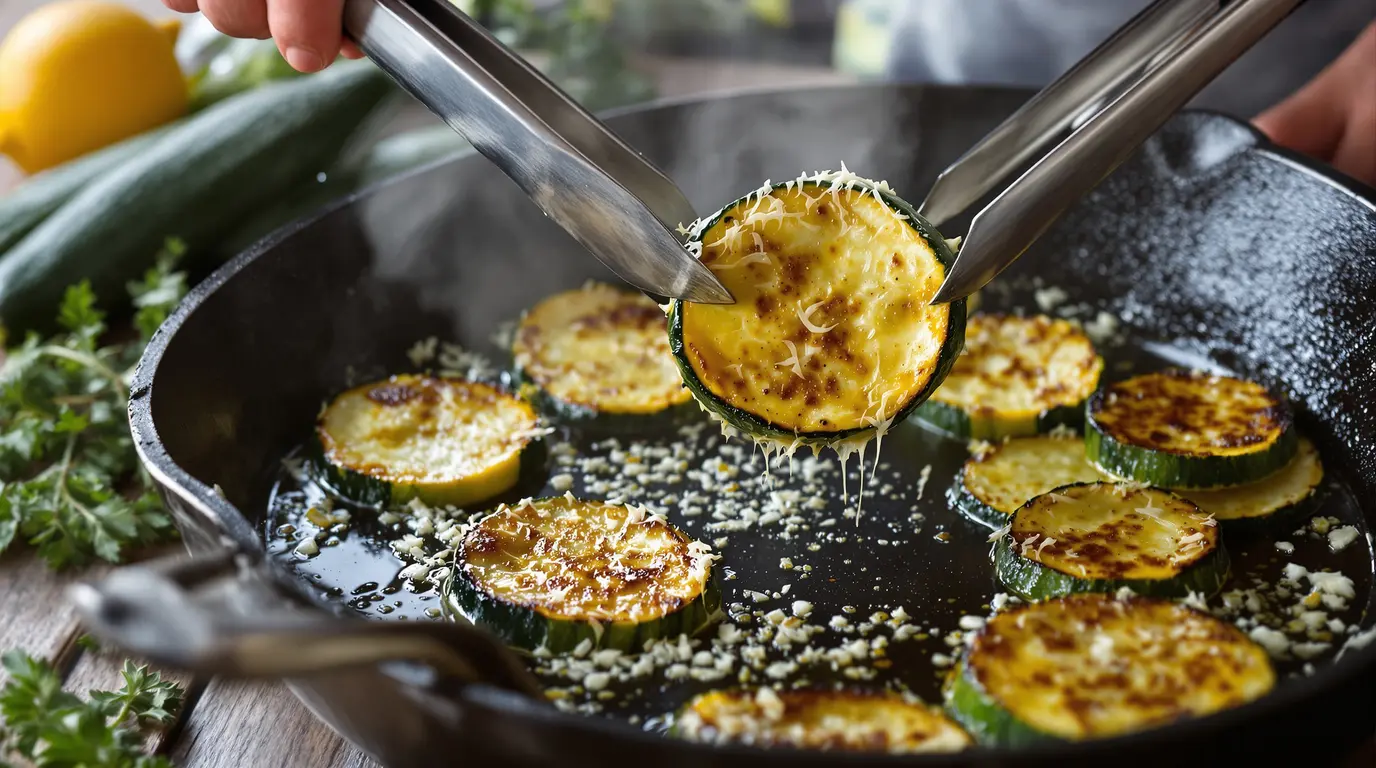
Summer zucchini often gets a bad reputation. People consider it too soft, bland, or watery. However, when cooked properly, zucchini can be a delightful treat. The secret used by farmers makes all the difference, and it’s easier than you might think.
Why zucchini often turns bland and watery
Zucchini is a vegetable high in water content. This is great when it is young and freshly picked, but it can become a challenge during cooking. If the cooking temperature isn’t high enough, zucchini releases moisture, resulting in a soft, lackluster dish.
Many cooks make mistakes here. Using a lukewarm skillet, an oven that isn’t hot enough, or overcrowding the pan leads to steaming instead of browning. This diminishes both flavor and texture, ending up with a dull dish when the vegetable can truly shine.
Farmers know this well. Zucchini harvested in summer has more flavor and better texture, but it requires high heat to maintain its deliciousness without turning spongy.
The farmer’s secret: high heat for browning zucchini
The heart of the matter lies in searing at high temperatures. When zucchini comes into contact with a hot surface, it browns quickly. This browning enhances flavor, while the inside remains tender but not mushy. This difference transforms the dish.
A farmer suggests a quick cooking process using olive oil or butter. It’s important to keep seasoning simple. Just salt and pepper often suffice, emphasizing the zucchini’s natural taste rather than masking it.
Another key point is to use enough oil to coat the pieces and prevent sticking. Moreover, resist the urge to flip too soon. Like a well-seared piece of meat, zucchini will release itself from the skillet when ready; forcing the issue can ruin that golden surface.
The same principle applies when roasting in the oven. A high temperature allows for fast, even cooking, helping the zucchini retain its shape while developing a pleasantly surprising grilled flavor.
How to use this method at home: steps and proportions
Here’s a straightforward method you can replicate at home, inspired directly by farmers’ techniques. It yields excellent results for four servings.
Ingredients
- 4 firm young zucchinis, about 6 to 8 inches long
- 2 tablespoons of olive oil or 30 grams of butter
- 1 teaspoon of fine salt
- 1/2 teaspoon of black pepper
- 1 tablespoon of vegetable seasoning
- 40 grams of grated Parmesan
Preparation
- Wash the zucchini without peeling them. The skin helps maintain structure during cooking.
- Slice them into even rounds or half-moons. Keeping similar thickness ensures even cooking.
- Preheat the oven to 450°F. This high heat is crucial.
- Place the pieces on a baking sheet lined with parchment paper. Drizzle with olive oil or melted butter.
- Add salt, pepper, vegetable seasoning, and grated Parmesan.
- Bake for 15 to 20 minutes, depending on thickness. The zucchini should be nicely browned around the edges and tender in the center.
- Serve immediately to maintain the best texture.
If cooking in a skillet, use a large, hot skillet with 2 tablespoons of oil. Avoid overcrowding. Cook for 4 to 5 minutes on each side without constant stirring to allow color to develop.
Variations, tips, and enhancements for even better zucchini
Zucchini benefits from a little creativity. Its mild flavor pairs well with herbs, spices, and cheeses. You might consider adding a pinch of smoked paprika, thyme, or oregano. A touch of Espelette pepper provides an excellent kick.
For a more indulgent twist, try mixing 2 tablespoons of fine breadcrumbs with the Parmesan for a delightful crust. A squeeze of lemon juice just before serving adds a bright, fresh note.
Choosing the right variety matters too. Yellow zucchini has a milder flavor and looks beautiful on the plate. Italian-style zucchini, which are typically longer, often have a lovely texture. If you come across smaller ones, they are usually more tender and have fewer seeds.
Zucchini can also be incorporated into richer recipes. A well-seared zucchini pairs wonderfully with grilled fish, roasted chicken, or even in an omelet. It can also serve as the base for a satisfying vegetarian dish with rice, quinoa, or fresh cheese.
Common mistakes to avoid
First, avoid cooking zucchini in water. This method makes them absorb extra moisture, resulting in a loss of flavor. Steaming is best reserved for blanching before freezing.
Second, don’t rush by overcrowding the skillet. If overloaded, the zucchini will steam instead of browning, leading to a mushy texture.
Third, steer clear of oversized zucchinis. Larger ones often contain more seeds and have a less delicate flesh. Younger, firmer zucchinis typically yield better results.
Lastly, resist the temptation to flip too early. Timing is everything. When the zucchini is properly browned, it will release easily. This is the perfect moment to turn them without harming that beautiful surface.
A simple vegetable that offers more than meets the eye
Summer zucchini can be incredibly flavorful. By applying a bit more heat, exercising patience, and using the right techniques, you can elevate this humble vegetable. Often, the difference between a bland vegetable and a truly delectable dish lies in these details.
Try cooking with high heat, watch for that perfect browning, and keep seasonings simple. You’ll quickly notice the transformation: zucchini becomes more fragrant, sweeter, and far more enjoyable to eat.
Sometimes, the best recipe is also the simplest. This is especially true when it comes to summer zucchini.